30 rokov ABIES - Ďakujeme všetkým našim priateľom, rodine, zákazníkom, partnerom za doterajšiu spoluprácu a spoločný rast.
Záhradníctvo ABIES®, Labutia 18, 931 01 Šamorín, časť Čilistov
 |
 |

30 rokov ABIES
e-mail: dreviny@dreviny.sk
+421 948 937 895 (Sale of Plants)
+421 948 877 888 (Garden Design and Landscaping)
+421 903 769 164 (Sale of Plants, Landscaping)


| search on: J | records:37 |
| 1. | Japanese Euonymus Albomarginatus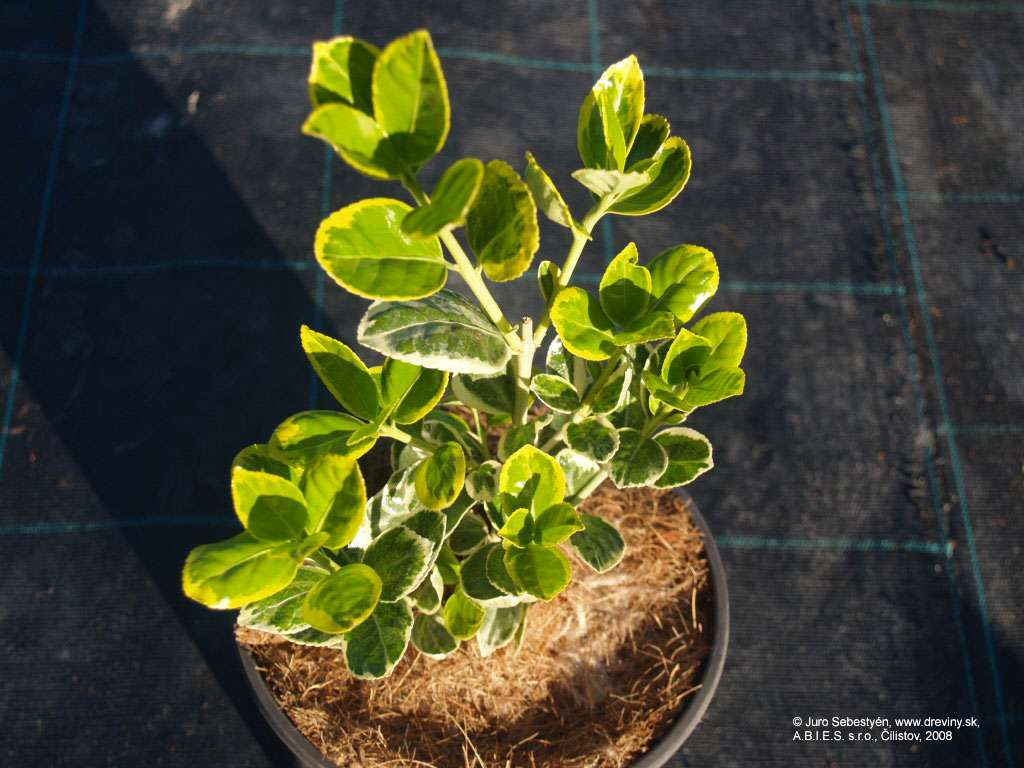 Description: |
Euonymus japonica Albomarginatus | details |
| 2. | Japanese Euonymus Albovariegatus Description: |
Euonymus japonica Albovariegatus | details |
| 3. | Japanese Euonymus Aureomarginatus Description: |
Euonymus japonica Aureomarginatus | details |
| 4. | Japanese Euonymus Microphyllus Variegatus, Boxleaf Euonymus Microphyllus Variegatus, Japanese Spindle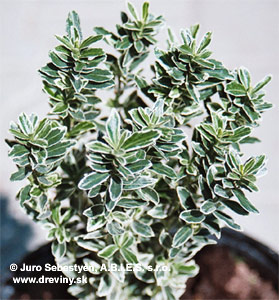 Description: At first glance, it would be easy to mistake this compact shrub for a variegated boxwood. This euonymus however, is far easier to care for and needs very little to make it happy and almost no pruning to keep it looking tidy. This compact, evergreen plant with an upright habit has small, semi-glossy and waxy deep green leaves that are margined in white. They are held closely together on upright stems. Blooms rarely. It is also excellent as a low hedge. Ideal for pots and sinks as it grows very slowly to 75cm high & wide in maturity. |
Euonymus japonica Microphyllus Albovariegatus | details |
| 5. | Japanese Euonymus Grey Beauty Description: |
Euonymus japonica Grey Beauty | details |
| 6. | Japanese Flowering Cherry, Kanzan Flowering Cherry, Sheraton Cherry Tree Description: This is one of the most popular and hardiest ornamental cherry trees available. A vigorous deciduous small to medium-sized tree with an upright habit when young and wider canopy when older. In spring the tree is laden with large double, purplish-pink showy flowers shortly before the bronze foliage appears. Leaves are large, ovate to narrow-ovate, with margins toothed. In autumn the dark green leaves turn bronzy orange before they fall. The bark has characteristic horizontal lenticels. As in case of other flowering cherry cultivars (known as ornamental cherries) the Kanzan has the stamens and pistils replaced by additional petals so flowers are sterile and do not bear fruit. It is therefore grown purely for its flowers and decorative value. As with all cherries any pruning or remedial work should be done in summer to reduce the risk of bacterial canker. A great tree for avenue planting or as a specimen tree planted in grass. It grows best in chalky soils and can widstand a partial shade. In maturity reaches a heigth of 8-10m and spread of 5-8m. |
Prunus serrulata Kanzan | details |
| 7. | Jonagold Apple Description: |
Malus Jonagold | details |
| 8. | Jojo Plum Description: |
Prunus domestica Jojo | details |
| 9. | Japanese White Pine Description: Beautiful pine up to 20-30 m in native Japan and Korea but with a slow growth in Europe. Broadly columnar; wide spreading branches; dense in youth; becomes flat toped with age; picturesque. Young trunk and branches smooth and greyish. Bark becoming darker and scaly after. Needles in 5 fascicle, bluish-green, slightly curved, 2-8 cm long, 0.7-1 mm wide, with 3-6 prominent white stomatic lines beneath. Cones ovoid-oblong, subsessile, 5-10 cm long, persisting for several years. Hardy in Zones 4-7. |
Pinus parviflora Glauca, Pinus pentaphylla Glauca | details |
| 10. | Japanese Anemone Description: |
Anemone hupehensis | details |
| 11. | Japanese Bloodgrass Description: An unusual and dramatic grass, slowly forming a low clump. Leaves are green at the base, with red tips that become more intense over the summer and fall until they appear to glow. It can be effectively used in plenty of situations - as an edging or groundcover, in the alpine or rock garden, in containers, mass planted or a specimen or even as a cut flower. Its main accents are good texture and form. Although it prefers moist soil, plants require good drainage, especially in winter. It is very easy to care for. Can be grown in full sun or partial shade, in normal, sandy or clay soil with neutral, alkaline or acid pH. Remove any all-green shoots if they appear. Clumps may be easily divided in the spring. Seldom flowers. Height 45-50 cm. Spread 30-45 cm. Slowly spreads through its undergroung suckers and can build groundcovering carpets this way. |
Imperata cylindrica Red Baron (Rubra) | details |
| 12. | Japanese Larch Description: "Japanese Larch is an important tree in forestry plantations, being grown throughout central and northern Japan (north to Hokkaid?), and also widely in northern Europe. The wood is tough and durable, used for general construction work. It is a medium-sized to large deciduous coniferous tree reaching 20-30 m tall, with a trunk up to 1 m diameter. The crown is broad conic; both the main branches and the side branches are level. The leaves are needle-like, light grey- or blue-green, 2-5 cm long. They turn bright yellow-gold to orange before dropping in the autumn, leaving the pinkish-brown shoots bare until the next spring. The cones are erect, ovoid-conic, 2-3.5 cm long, they are green when immature, turning brown and opening to release the seeds when mature, 4-6 months after pollination. The old cones commonly remain on the tree for many years, turning dull grey-black. It grows at 500-2,900 m altitude on well-drained soils, avoiding waterlogged ground. It prefers an open airy position in a light or gravelly well-drained soil. Plants are intolerant of badly drained and chalky soils and of heavy pollution, but they tolerate acid and infertile soils. Succeeds on rocky hill or mountain sides and slopes. The trees are attractive to small finches, tits and treecreepers. A fast-growing tree, it can be used in shelterbelt plantings. We use it in landscaping for golf courses, campuses, parks. " |
Larix kaempferi (Larix leptolepis) Blue Dwarf | details |
| 13. | Japanese Snowball Mariesii, Mariesii Viburnum, Maries Doublefile Viburnum Description: The Mariesii Japanese Snow Ball is a low maintainance deciduous landscape shrub. It is a remarkable plant, with widely spreading branches that naturally assume a series of horizontal tiers. Mariesii emphasises this layered effect, dramatic at any time, but especially when the flowers appear, neat large white abundant lacecap heads arranged in two parallel rows along the upperside of the spreading branches. They are the most striking aspect of this shrub causing a magnificent sight when in full bloom from late spring to early summer. Bright red fruit follows. The leaves are broadly ovate, toothed and dark green, with soft, hairy undersides, perhaps lighter green in summer. They turn reddish purple in fall. The Mariesii Japanese Snow Ball is resistant against deer, pollution, seashore, slope and grows in temperature zones 4 to 8. Excellent healthy plant for massing or as a specimen, tolerant of drought. Thrives on sandy loam to some clay both in part shade and full sun on soils in pH range of 6.1 to 7.8. It does not tolerate heavy, damp soil. It reaches height of 3m and spread of 4m in maturity. Careful pruning, similar to that used for espalier apples, can produce a satisfying symmetrical shrub. |
Viburnum plicatum var. tomentosum Mariesii | details |
| 14. | Japanese Snowball Bush Description: This evergreen (in zones 7-8) to deciduous shrub has a compact, rounded form, with spreading branches and matures at approximately 2.5-3m tall and wide. In early spring it is for several weeks loaded with clusters of glossy ornamental dark red flower buds for several weeks before opening in mid to late April to exhibit its showy waxy white blossoms and strong, spicy scent. Once open, the flowers scent the air with their clove-like perfume for another two weeks. A display of beautiful flowers lasts for weeks. The dark green glossy leaves are handsome throughout the growing season and turn a brilliant orange-red in autumn. They are resistant to bacterial leaf spot and powdery mildew. The Mohawk is excellent for use as a specimen plant, as a shrub border or planted near any area where the spicy clove-like fragrance can be fully appreciated. Although the Mohawk grows well in many exposures and soils, it prefers full sun to light shade. Provide moderately fertile, well-drained, soil. Shelter from cold, drying winds. Thrives in both hot and cold climates, from zone 5 to 8. |
Viburnum burkwoodii Mohawk | details |
| 15. | Jackmanii Clematis Description: Jackman clematis is probably one of the most popular large-flowered, late-flowering clematis. It was bread at the Jackman and Sons nursery in Surrey, England, in 1858 by crossing Clematis lanuginosa from China with Clematis viticella from Southern Europe. The plant climbs with twining stems and with good support, vines can reach a length of 3 m in a single growing season. The deciduous leaves are trifoliate or simple, opposite and 5-10 cm long. Spectacular purple flowers are large, to 18 cm across, with 4-6 petal-like sepals, each about 5 cm long. Flowers appear in big amounts from mid June through August. The fruit is a dry capsule with a 5 cm long silver-gray wispy ""tail"" covered with long silky hair. These long lasting fluffy clusters look very effective in dried arrangements. Since Jackman clematis produces flowers on the current season's growth, they should be pruned to the ground in late winter or early spring before new growth begins. Suitable for training over a rock wall or pergola, and along fences. Many gardeners plant clematis at the base of a rose or other shrub and let it climb up and through the branches. Jackman clematis is tolerant of a wide range of soils, but it thrives in light, loamy soil that drains rapidly. It needs plenty of moisture during the growing season. Prefers full sun or partial shade, however its roots need constant full shade. Grows in temperature zones 4 – 9 and therefore is hardy also in coldest parts of Middle Europe. Belongs to large, late-flowered group. |
Clematis jackmanii (Purple) | details |
| 16. | Juliette Chinese Bearberry Description: This is a great ground cover plant grafted on a 80-90cm stem to produce a small, weeping tree. It is evergreen with small, shiny, green ovate-elliptic-shaped leaves and with masses of cream-white flowers in early summer, followed in the Autumn with berries. In late Autumn and in Winter these berries are good nourishment for singing birds. The quantity of berries and the good growth of the plant should be supported by a yearly pre-spring fertilizing, especially if planted in pot. Grows well in most soils, in sun or part shade, sheltered or in high winds, dry or moist conditions. It needs regular watering to get established, but is forever after quite drought-hardy. Ideal for rock gardens and/or as an outstanding feature in borders with low planting. For best results, remove dead and damaged growth in mid spring. |
Cotoneaster suecica Juliette | details |
| 17. | Japanese Cedar Rasen-Sugi Description: This evergreen tree surely is one of the most stylish varieties of Japanese cedar - the national tree of Japan. It has unbelievably decorative screw-like leaves turning around narrow branches and thus lending them also very unusual screw-like form. There is probably no other conifer with a similar leave structure.When young, the tree has a loose upright growth with conical crown gradually developing within 15-20 years into a vigorous, very elegant, irregularily conical broader tree growing up to 6-9m tall. Tiny green, aromatic leaf-like needles curl around themselves giving the long, slender branches a slight twist. These curious twists create a really individual stance to each tree therefore it makes a perfect specimen plant in both bigger and smaller gardens and parks. Best located in full sun or partial shade in well-drained average to slightly acidic and sandy soil. Mulching recommended. This japanese cedar grows well in temperature zones 6 to 9. |
Cryptomeria japonica Rasen-Sugi | details |
| 18. | Jasmina Rose, pink-violet climbing rose Description: |
Rosa Jasmina | details |
| 19. | Japanese White Pine - BONSAI, in wooden container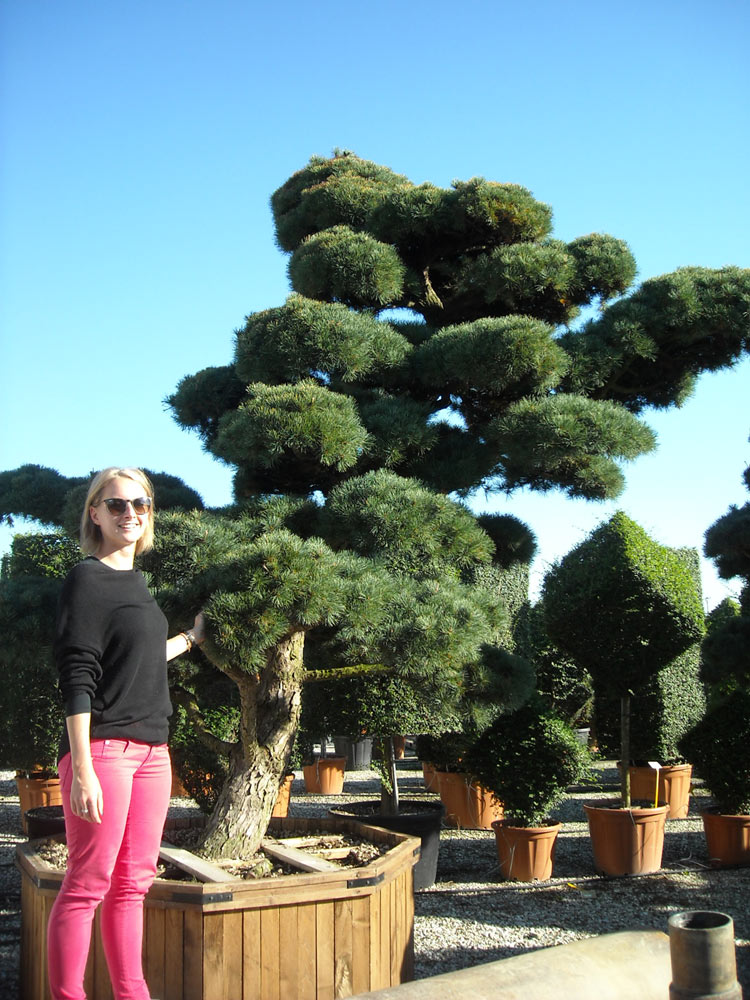 Description: THESE BONSAIS ARE CURRENTLY LOCATED AT THE WAREHOUSE OF OUR SUPPLIER. WE WILL BE PLEASED TO SUPPLY THEM TO YOUR PREMISES BASED ON YOUR PAYMENT IN ADVANCE. TRANSPORT IS INCLUDED IN THE PRICE. Japanese white pine is one the most beautiful pine up to 20-30 m in native Japan and Korea but with a slow growth in Europe. Broadly columnar; wide spreading branches; dense in youth; becomes flat toped with age; picturesque. Young trunk and branches smooth and greyish. Bark becoming darker and scaly after. Needles in 5 fascicle, bluish-green, slightly curved, 2-8 cm long, 0.7-1 mm wide, with 3-6 prominent white stomatic lines beneath. Cones ovoid-oblong, subsessile, 5-10 cm long, persisting for several years. Hardy in Zones 4-7. |
Pinus parviflora BONSAI, Pinus pentaphylla BONSAI | details |
| 20. | Japanese Spindle Green Rocket, Japanese Spindle Green Spire, Japanese Spindle Bekomasaki Description: |
Euonymus japonica Green Rocket | details |
| 21. | Japanese Flowering Cherry, Kanzan Flowering Cherry, Sheraton Cherry Tree Description: This is one of the most popular and hardiest ornamental cherry trees available. A vigorous deciduous small to medium-sized tree with an upright habit when young and wider canopy when older. In spring the tree is laden with large double, purplish-pink showy flowers shortly before the bronze foliage appears. Leaves are large, ovate to narrow-ovate, with margins toothed. In autumn the dark green leaves turn bronzy orange before they fall. The bark has characteristic horizontal lenticels. As in case of other flowering cherry cultivars (known as ornamental cherries) the Kanzan has the stamens and pistils replaced by additional petals so flowers are sterile and do not bear fruit. It is therefore grown purely for its flowers and decorative value. As with all cherries any pruning or remedial work should be done in summer to reduce the risk of bacterial canker. A great tree for avenue planting or as a specimen tree planted in grass. It grows best in chalky soils and can widstand a partial shade. In maturity reaches a heigth of 8-10m and spread of 5-8m. |
Prunus serrulata Kanzan, multistem | details |
| 22. | Japanese Flowering Weeping Cherry, Kiku-shidare Flowering Cherry Description: |
Prunus serrulata Kiku-Shidare-sakura | details |
| 23. | Judas Tree Description: |
Cercis siliquastrum | details |
| 24. | Japanese Euonymus Description: Popular evergreen frost-hardy upright shrub with oval shiny-green thick leaves with surface resembling to wax. Often used in elegant hedges of different height from 40cm to 3m or as an evergreen background of an ornamental planting. It does not have any special requirements on soil and tolerates pruning well. Its great advantage is the ability to grow in half-shade and shade. When left unclipped it grows up to 3-4m and spreads to 2-3m. |
Euonymus japonica (Euonymus japonicus) | details |
| 25. | Japanese White Pine - BONSAI, in wooden container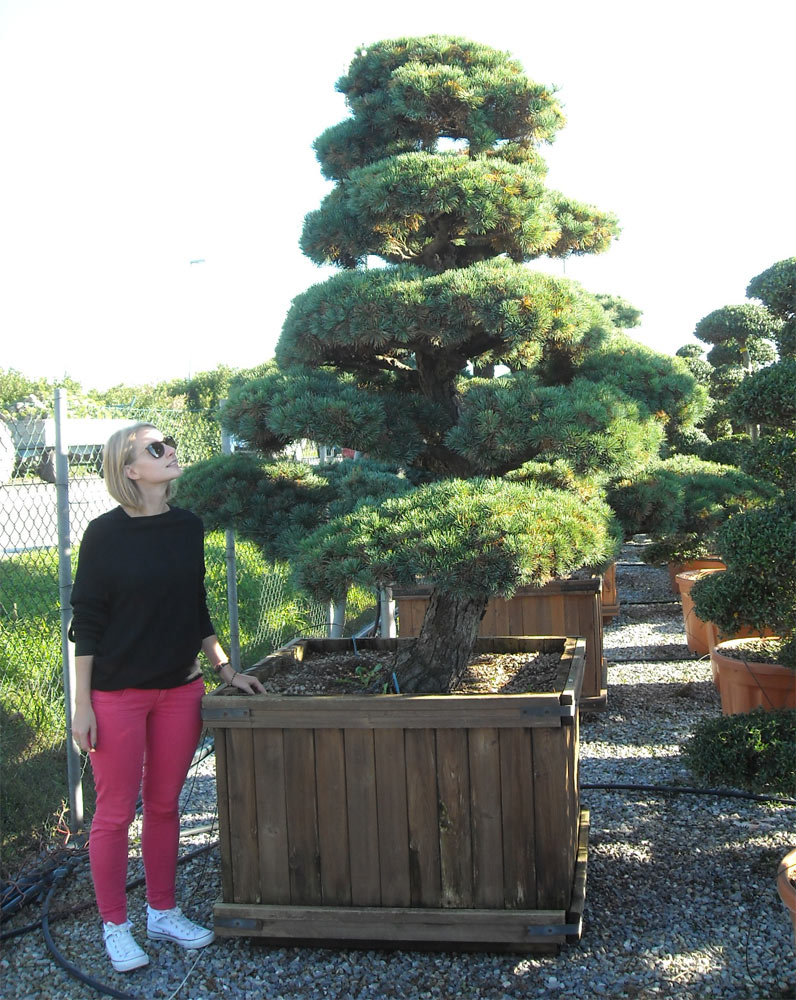 Description: THESE BONSAIS ARE CURRENTLY LOCATED AT THE WAREHOUSE OF OUR SUPPLIER. WE WILL BE PLEASED TO SUPPLY THEM TO YOUR PREMISES BASED ON YOUR PAYMENT IN ADVANCE. TRANSPORT IS INCLUDED IN THE PRICE. Japanese white pine is one the most beautiful pine up to 20-30 m in native Japan and Korea but with a slow growth in Europe. Broadly columnar; wide spreading branches; dense in youth; becomes flat toped with age; picturesque. Young trunk and branches smooth and greyish. Bark becoming darker and scaly after. Needles in 5 fascicle, bluish-green, slightly curved, 2-8 cm long, 0.7-1 mm wide, with 3-6 prominent white stomatic lines beneath. Cones ovoid-oblong, subsessile, 5-10 cm long, persisting for several years. Hardy in Zones 4-7. |
Pinus parviflora BONSAI, Pinus pentaphylla BONSAI | details |
| 26. | Juniper Bonsai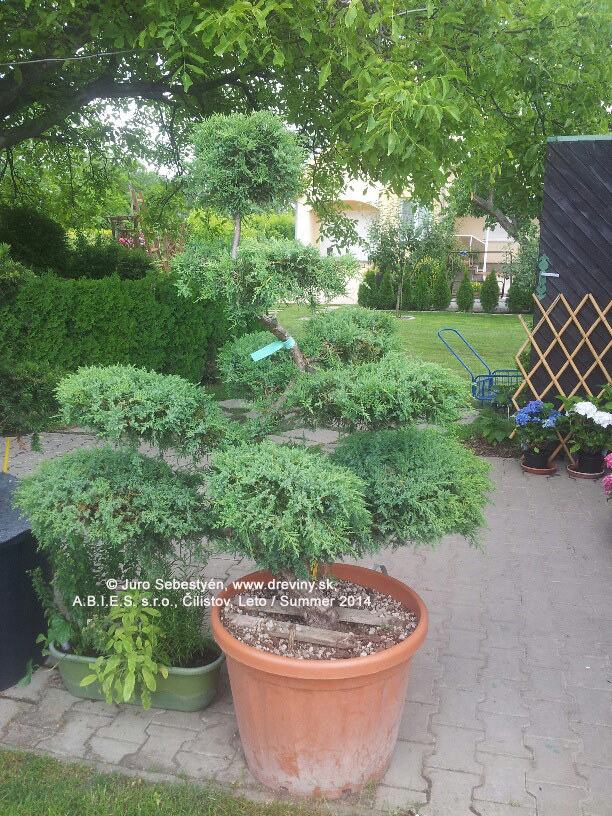 Description: |
Juniperus | details |
| 27. | Japanese Yew Bonsai, Spreading Yew Bonsai Description: |
Taxus cuspidata, bonsai | details |
| 28. | Japanese White Pine, Japanese Five-needle pine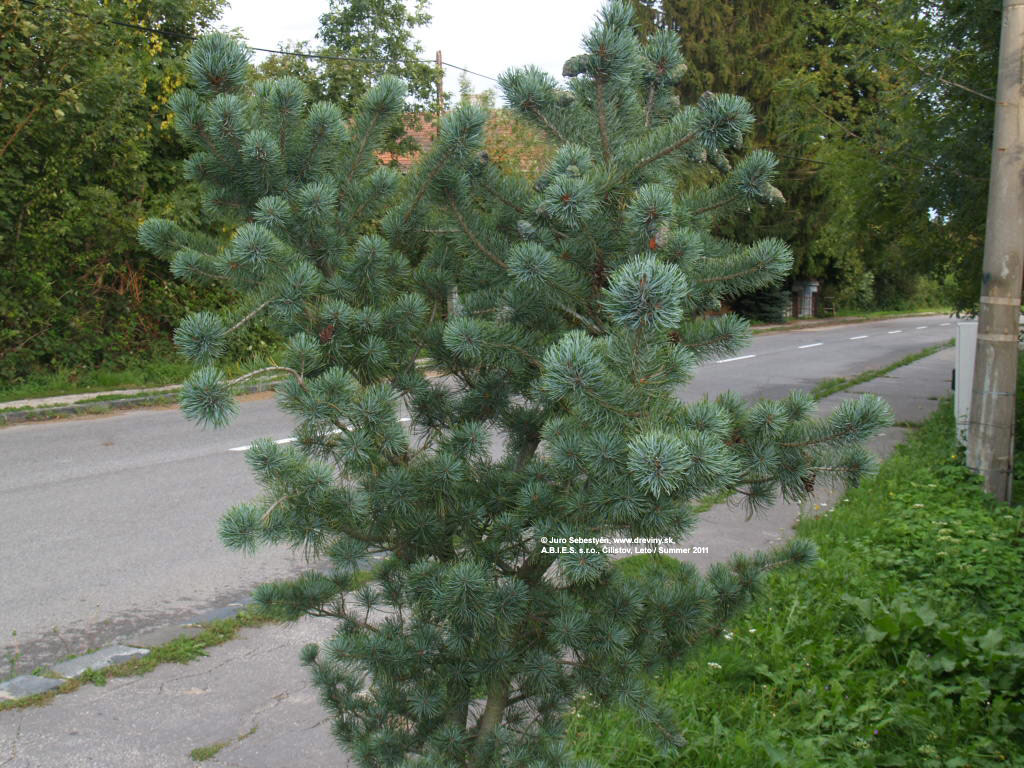 Description: |
Pinus parviflora (pentaphylla) | details |
| 29. | Jupiter Common Grape Vine Description: |
Vitis vinifera Jupiter | details |
| 30. | Jonagold AppleDescription: |
Malus Jonagold | details |
| 31. | Judas Tree Description: |
Cercis siliquastrum | details |
| 32. | Jackmanii Clematis Description: Jackman clematis is probably one of the most popular large-flowered, late-flowering clematis. It was bread at the Jackman and Sons nursery in Surrey, England, in 1858 by crossing Clematis lanuginosa from China with Clematis viticella from Southern Europe. The plant climbs with twining stems and with good support, vines can reach a length of 3 m in a single growing season. The deciduous leaves are trifoliate or simple, opposite and 5-10 cm long. Spectacular purple flowers are large, to 18 cm across, with 4-6 petal-like sepals, each about 5 cm long. Flowers appear in big amounts from mid June through August. The fruit is a dry capsule with a 5 cm long silver-gray wispy ""tail"" covered with long silky hair. These long lasting fluffy clusters look very effective in dried arrangements. Since Jackman clematis produces flowers on the current season's growth, they should be pruned to the ground in late winter or early spring before new growth begins. Suitable for training over a rock wall or pergola, and along fences. Many gardeners plant clematis at the base of a rose or other shrub and let it climb up and through the branches. Jackman clematis is tolerant of a wide range of soils, but it thrives in light, loamy soil that drains rapidly. It needs plenty of moisture during the growing season. Prefers full sun or partial shade, however its roots need constant full shade. Grows in temperature zones 4 – 9 and therefore is hardy also in coldest parts of Middle Europe. Belongs to large, late-flowered group. |
Clematis Jackmanii | details |
| 33. | Japanese Emperor Oak Carl Ferris Miller, Carl Ferris Miller Daimyo Oak Description: |
Quercus dentata Carl Ferris Miller | details |
| 34. | Jadernicka Apple Description: |
Malus Jadernicka | details |
| 35. | Japanese Euonymus Bravo Description: |
Euonymus japonica (Euonymus japonicus) Bravo | details |
| 36. | Japanese Silverberry, Umbellata Oleaster, Autumn Olive, Autumn Elaeagnus, Spreading Oleaster Description: |
Elaeagnus umbellata | details |
| 37. | Judas Tree Description: |
Cercis siliquastrum | details |
Last update on:
07.11.2026 17:10:02
10% discount | Hedging plants | Climbing shrubs and plants | Trees, shrubs and bushes for half-shade | Plants for shade | Bonsai plants | Flowering plants | Plants for terraces and balconies | Evergreen plants | Miniature plants growing up to 1.5m | Conifers growing up to 1.5 - 3m | Conifers growing higher than 3m | Deciduous bushes | Deciduous plants growing up to 3m | Deciduous plants growing higher then 3m | Fruit trees and bushes | Perennials | Ground covering bushes and perennials | Trees and shrubs with ornamental fruit | With beautiful autumn leaf colour | Discounts | Having interesting winter colour or shape | Plants for acid soils | Plants for alkaline soils | Grasses | Bamboos | For rock gardens | Woody plants to lakes and streams | Water plants | Healing and aromatic plants | Citruses | Supplementary goods | Bulbs | Small trees up to 5m wide, for small gardens | Fertilizers | Christmas trees | Fruit trees | Herbs | Multi-stemmed trees |
Naši partneri:
Odborné preklady a tlmočenie, aj úradné, Bratislava
www.kochlik.sk - kvetináče
www.zavlahy-soos.sk - zavlažovacie systémy
soulbridge.sk
www.kochlik.sk - kvetináče
www.zavlahy-soos.sk - zavlažovacie systémy
soulbridge.sk
www.rastliny-semena.sk - ponuka semien a osív
www.agellus.sk - trávnaté koberce
www.eshop-kvetinace.sk
www.agellus.sk - trávnaté koberce
www.eshop-kvetinace.sk


Webstránky vytvoril www.Aweb.sk - tvorba web stránok
VITAJTE V NAŠOM ZÁHRADNÍCTVE!
PREDAJŇA ČILISTOV SHOP - otvár. hodiny / open. hours:
Po-Pia / Mon-Fri 8:00-17:00
So/Sat 8:00-16:00