30 rokov ABIES - Ďakujeme všetkým našim priateľom, rodine, zákazníkom, partnerom za doterajšiu spoluprácu a spoločný rast.
Záhradníctvo ABIES®, Labutia 18, 931 01 Šamorín, časť Čilistov
 |
 |

30 rokov ABIES
e-mail: dreviny@dreviny.sk
+421 948 937 895 (Sale of Plants)
+421 948 877 888 (Garden Design and Landscaping)
+421 903 769 164 (Sale of Plants, Landscaping)


| search on: E | records:48 |
| 1. | English Yew, European Yew Cone Description: |
Taxus baccata Cone | details |
| 2. | European Hornbeam, Common Hornbeam Description: |
Carpinus betulus Fastigiata (Pyramidalis) | details |
| 3. | English Ivy Description: |
Hedera helix Hibernica SPALLIERA | details |
| 4. | Emerald Gaiety Wintercreeper on an 80-100cm STANDARD Description: |
Euonymus fortunei Emerald Gaiety | details |
| 5. | Emerald and Gold Wintercreeper, Emerald´n Gold Wintercreeper Description: |
Euonymus fortunei Emerald and Gold (Emerald´n Gold) | details |
| 6. | English Oak, Pedunculate Oak, Truffle oak Description: English oak is a majestic tree with a very wide spreading crown, a short sturdy trunk, and deeply fissured gray brown bark. It is a magnificent tree, with a broad, irregular crown. The bark is grey and fissured, and develops burrs as it ages. The massive main branches often develop low on the trunk and become twisted and gnarled with age. English oak is tolerant of acidic to alkaline soils. In ideal sites it will grow up to 1000mm per year, and will become a grand tree within two decades. On compacted sites, English Oak will grow more slowly, only a foot (0.3 m) or so a year in youth but will still develop into a majestic, strong-wooded that can live more than 700 years. The autumn foliage colour is not exceptional, and frequently is a rich, dark brown. As the foliage is small, fallen leaves are not particularly difficult to eliminate and will not clog drains. The acorns form a valuable food resource for several small mammals and some birds, notably Eurasian Jays (Garrulus glandarius). Jays were overwhelmingly the primary propagators of oaks before humans began planting them commercially, because of their habit of taking acorns from the umbra of its parent tree and burying it undamaged elsewhere. Mammals, notably squirrels who tend to hoard acorns and other nuts most often leave them too abused to grow in the action of moving or storing them. Q. robur supports the highest biodiversity of insect herbivores of any British plant (>400 spp). Oak wood is extremely dense, strong and durable and has thus found much use in building and construction. |
Quercus robur | details |
| 7. | Elizabeth Clematis Description: Popular vigorously growing cultivar that twines around the supports by means of curling petioles. In May or June it produces soft pink medium size semi-double flowers on previous year’s wood. They have silky appearance, nicely contrasting bright yellow stamens and a light vanilla scent. In summer or in September it usually flowers again with single flowers on new growth . Suitable for training over small garden supports in sun or part shade such as trellises on walls or pergolas facing south, east or west. Good for covering large areas. Particularly useful for sunny sites in small gardens. Has to be pruned only lightly or not at all. Frost hardiness - zones 4-9, i.e. whole Slovak teritory. Height: 6m to 9m. |
Clematis montana Elisabeth | details |
| 8. | Emerald Green Arborvitae, Smaragd American Arborvitae, Smaragd White Cedar, BALL on standard Description: Balls on standars shaped from most popular arborvitae (white cedar) Smaragd are extraordinarily stylish and elegant. They are very suitable for formal gardens in classic or romantic style and also can be grown in entrance areas and courtyards where we plant them as specimens or in groups. We can also plant them into large containers with sufficient volume of high quality substratum and grow them on larger balconies, verandas and patios. However, in containers we have to water them every day and suplement them annually with a fertiliser with long-term release of nutrients e.g. of the Osmocote or Proven Winners. The arborvitae balls thrive best in slightly acid to slightly alkaline soils (pH range 6-8). They keep their bright green foliage colour well also in winter. They require clipping at least once or twice a year to be made easily also by a beginner. We have to clip them during vegetation season from April to middle of September but never later as the plant needs to heal its wounds and produce a little bit of new foliage until the arrival of winter in order to be able to use it for breathing and receiving sunshine. Depending on regularity of our clipping after many years the ball on standard can reach a diameter of about 1 meter. |
Thuja occidentalis Smaragd | details |
| 9. | English Yew, European YewDescription: |
Taxus baccata | details |
| 10. | Emerald Green Arborvitae, Smaragd American Arborvitae, Smaragd White Cedar Description: |
Thuja occidentalis Smaragd (Emeraude) | details |
| 11. | Érdi Bőtermő Sour Cherry, Erdi Botermo Sour Cherry Description: |
Prunus cerasus Érdi Bőtermő (Erdi Botermo) | details |
| 12. | Evening Primrose, Missouri Primrose Description: |
Oenothera macrocarpa | details |
| 13. | European Mountain Ash, Rowan Description: Familiar deciduous graceful tree, growing up to 20m, with few ascending branches creating an ovoid crown. Its bark is smooth or slightly ridged, grey to silver. Leaves are pinnate, with 5-8 pairs of leaflets, hairy when young, mid-green above and paler below. In Spring the tree produces creamy-white small flowers in oblong inflorescences. In Autumn their develop into bunches of bright red globular berries in pendulous clusters. Moutain Ash is widely spread across Europe - mainly in looser forests, on their margins or on pastures. It can be found from lowlands to mountains up to an altitude of 2000m. Requires sunny location and grows on dry or fairly moist fertile clay or rocky soils, less commonly on sand. Pioneering species. Used often to plant elegant tree rows. |
Sorbus aucuparia | details |
| 14. | Evergold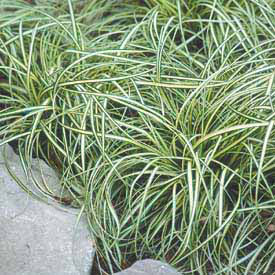 Description: Evergold is evergreen, low growing, mounding grass. Displays beautiful white, creamy striped foliage. Looks the same in winter and summer. Excellent sedge for a damp, shady location. Trim back in spring to tidy up the plant. Good for edging, groundcover, and containers. Cool season grass. Requires sun or half shade, reaches 20cm. |
Carex morrowii Aureovariegata | details |
| 15. | Echinacea purpurea Alba Description: Echinacea purpurea alba has all the strong traits of its pink cousin. White flowers with a hint of green in their early stages make for an attractive variation on this plant. Planted enmasse echinacea provides a lovely meadow feel to the garden. Height is 80cm, we plantt psm 5 and it requires an open full sun position. Soil :must be well drained, quality is not important. Flowers bloom the whole Summer. Tolerances in frost & cold. |
Echinacea purpurea | details |
| 16. | English violet, Garden violet, Sweet violet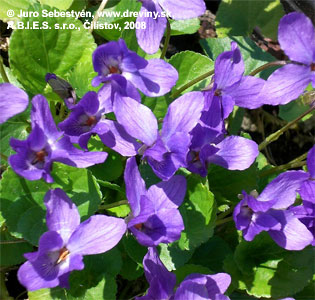 Description: A sweet scented plant that has heart-shaped leaves which form loose rosettes. The sweetly fragrant flowers nestle among the leaves in late winter and spring. The flowers are generally violet but can be white, blue, rose pink or even apricot tinted. The simple flowers have a unique charm all their own and make the most perfect of posies. Its height and width is 15cm, stands fully hardy conditions, sun as well as shade. |
Viola odorata | details |
| 17. | Edit Colorado Blue Spruce, Edit White Spruce, Edit Silver Spruce Description: |
Picea pungens Edith | details |
| 18. | Ebbinge’s Silverberry, Oleaster Hedge Description: Large evergreen shrub with spineless branches. This fine, dense plant is a cross between Elaeagnus macrophylla and Elaeagnus pungens. Its stem and young sprouts are covered with brown scales. Green foliage has silver scales on the surface and spectacular white underside and forms an inpenetrable screen. It produces insignificant, fragrant, tiny white flowers all through the summer and well into the autumn followed by red, olive-shaped, edible fruits in spring. Oleaster is ideal for foundations, fence lines and background plantings. Grows fast (depending from soil quality 30 to 70cm a year) reaching up to 2,5-3m. The mature plant can also be pruned into a small accent tree. Prefers sunny or partially shaded position. To lerates most soil types, however it thrives in moist but well-drained soil. It is also ideal for shady, dry, seaside or windy sites but not cold, wet or very alkaline sites. The plant needs regular watering – weekly or more often in extreme heat. Grows best in temperature zones 7-11 and therefore is better suited for gardens in warmer areas of Middle Europe. |
Elaeagnus (Eleagnus) ebbingei Limelight | details |
| 19. | Eleyi Apple, Elleyi Apple Description: |
Malus Eleyi (Elleyi) | details |
| 20. | Eleyi AppleDescription: |
Malus Eleyi (Elleyi) | details |
| 21. | Earligo Peach Description: |
Prunus persica Earligo | details |
| 22. | Elder, Elderberry, Black Elder, European Elder, European Elderberry, European Black Elderberry, Common Elder, Elder Bush Description: Black Elder is an extraordinarily resistant shrub with nicely shaped leaves. Leaves have a wine-red or black colour and they consist of a number of small leaflets. At the beginning of summer elder produces abundant and quite large inflorescences of very aromatic small flowers. They later develop into small black berries and become a food of choice for several species of birds. They are also often used to produce elder wine and syrups. The inflorescences can also used for production of delicious aromatic elder lemonade and syrup. The black elder grows well even at dry an shady locations and in poor soils. It belongs to the most resistant native species of shrubs in Central Europe and can easily be propagated by seeds. It reaches a maximal height of 2-3m and width of 1 metre at maturity. |
Sambucus nigra Black Tower | details |
| 23. | Emil Nolde Bush Rose Description: |
Rosa Emil Nolde | details |
| 24. | Echiniformis Dwarf White Spruce, Hedgehog White Spruce Description: |
Picea glauca Echiniformis | details |
| 25. | English Yew, European YewDescription: |
Taxus baccata | details |
| 26. | English Yew, European YewDescription: |
Taxus baccata | details |
| 27. | Emerald Queen Norway Maple Description: Ultimate height of this quickly growing maple in maturity is 15 - 18m. When young, it produces a narrow canopy that becomes oval with age. It has dark grey bark and light brown branches with 5-7-lobed dark-green leaves. They are light pink when sprouting and later grow to 15-20cm long. In Autumn they change they colour to bright-yellow and sometimes red. Flowers are yellow green and appear in April before the leafs. Emerald Queen Maple is mainly used in parks and larger private gardens. It is also suitable for planting as an avenue tree. It grows well on any type of soil except peat. Very hardy tree tollerating also pollution and drought. |
Acer platanoides Emerald Queen | details |
| 28. | Escapade Rose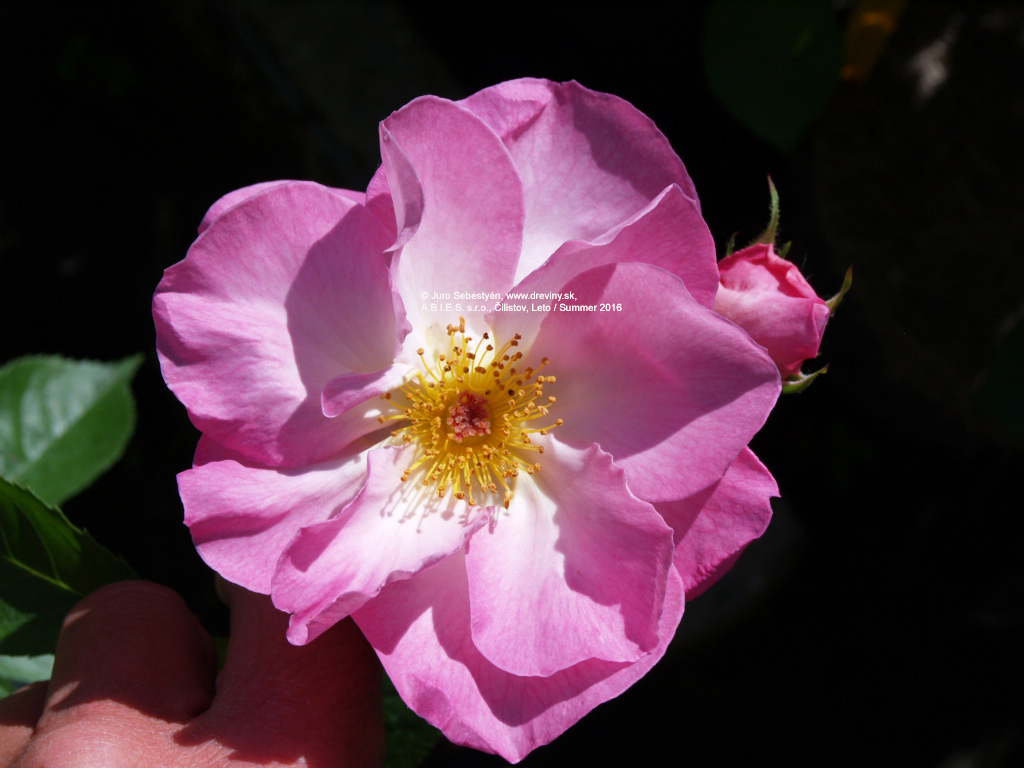 Description: |
Rosa Escapade | details |
| 29. | English Yew, European Yew ConeDescription: |
Taxus baccata Cone | details |
| 30. | English Oak, Pedunculate Oak, Truffle Oak Description: Purple-red-leaved variety of English Oak with ascending branches, round canopy and dark grey bark. It reaches an approximate height of 15 metres at maturity. Young twigs are reddish-brown. Leaves are 6-13 cm long and 5 - 8 cm wide. They appear as deep purple-browne-red in the spring. Later they turn to dark purplish-green. The Purpurascens Oak can be planted as a specimen in public areas and larger private gardens. After being established, it is quite drought resistent. It does not grow well however on constantly wet or boggy soils. It is fully hardy under Middle European climates. |
Quercus robur Purpurascens, Quercus robur Atropurpurea | details |
| 31. | Emerald Gaiety Wintercreeper Description: |
Euonymus fortunei Emerald Gaiety | details |
| 32. | English IvyDescription: |
Hedera helix | details |
| 33. | English Oak, Pedunculate Oak, Truffle oakDescription: English oak is a majestic tree with a very wide spreading crown, a short sturdy trunk, and deeply fissured gray brown bark. It is a magnificent tree, with a broad, irregular crown. The bark is grey and fissured, and develops burrs as it ages. The massive main branches often develop low on the trunk and become twisted and gnarled with age. English oak is tolerant of acidic to alkaline soils. In ideal sites it will grow up to 1000mm per year, and will become a grand tree within two decades. On compacted sites, English Oak will grow more slowly, only a foot (0.3 m) or so a year in youth but will still develop into a majestic, strong-wooded that can live more than 700 years. The autumn foliage colour is not exceptional, and frequently is a rich, dark brown. As the foliage is small, fallen leaves are not particularly difficult to eliminate and will not clog drains. The acorns form a valuable food resource for several small mammals and some birds, notably Eurasian Jays (Garrulus glandarius). Jays were overwhelmingly the primary propagators of oaks before humans began planting them commercially, because of their habit of taking acorns from the umbra of its parent tree and burying it undamaged elsewhere. Mammals, notably squirrels who tend to hoard acorns and other nuts most often leave them too abused to grow in the action of moving or storing them. Q. robur supports the highest biodiversity of insect herbivores of any British plant (>400 spp). Oak wood is extremely dense, strong and durable and has thus found much use in building and construction. |
Quercus robur | details |
| 34. | East Asian White Birch, Silver Birch, Warty Birch Description: |
Betula pendula, syn. B. verrucosa, B. alba | details |
| 35. | Emerald Green Arborvitae, Smaragd American Arborvitae, Smaragd White Cedar SPIRAL Description: Elegant spirals suitable for exclusive formal gardens and to buildings in classical, romantic or historical style where we plant them as specimens or in groups. They are also appropriate for large pots or containers (with a minimal volume of 80 litres) and therefore we can grow them also on larger balconies, verandas and patios. In containers however, we have to water them every day and suplement them annually with a fertiliser with long-term release of nutrients e.g. of the Osmocote or Proven Winners. The arborvitae balls thrive best in slightly acid to slightly alkaline soils (pH range 6-8). Their bright green foliage and esthetic shape decorates the garden and house all around the year. We can easily keep them in shape by clipping at least once or twice a year that can easily be made also by a beginner. We have to clip them during vegetation season from April to middle of September but never later as the plant needs to heal its wounds and produce a little bit of new foliage until the arrival of winter in order to be able to use it for breathing and receiving sunshine. Their height of spirals is around 180cm and their width at the base approximately 40cm. After many years they can reach a height of even 4m but we decide on their final height during our annual clipping. |
Thuja occidentalis Smaragd SPIRAL | details |
| 36. | Elephant's Ears Winterglow (Winterglut) Description: |
Bergenia cordifolia Winterglut | details |
| 37. | Edible Chestnut, seedlings Description: Beloved edible chestnut. Grows to a robust tree up to 30m high and 15m wide. It has dark-green oblong leaves changing their colour to yellow in autumn. In spring it produces small spikes of cream-yellow flowers. Throughout the summer they develop into edible fruit with peelable shell. The fruit is most tasty after partially cutting its shell by knife and baking it in oven. The chestnut trees grow best when planted into acid or neutral soil in a sunny position. They prefer sandy, well-drained soils rich in humus. After good rooting they resist even prolonged periods of drought. In highly alkaline (chalky) soils they are only able to survive if good portion of acid peat is dug into soil around their stem annually. The flowers are pollinated by insects and wind and mostly need cross pollination. The size of chestnut pollen (14-18 microns) permits the transportation of appreciable amounts at distances of about 100 km. However, the information about who will pollinize whom in the world of chestnut hybrids is difficult to come by; therefore we suggest pairing trees of similar heritage. Seedling chestnuts on our offer can start cropping approximately after 4 years. THESE PLANTS ARE WELL-ROOTED IN POTS THEREFORE YOU CAN PLANT THEM THROUGHOUT THE YEAR. |
Castanea sativa | details |
| 38. | English IvyDescription: |
Hedera helix | details |
| 39. | Evergreen Oak, Holly Oak, Holm Oak Description: |
Quercus ilex | details |
| 40. | Érdi Bőtermő Sour Cherry, Erdi Botermo Sour Cherry Description: |
Prunus cerasus Érdi Bőtermő (Erdi Botermo) | details |
| 41. | Ebbinge’s Silverberry, Oleaster HedgeDescription: Large evergreen shrub with spineless branches. This fine, dense plant is a cross between Elaeagnus macrophylla and Elaeagnus pungens. Its stem and young sprouts are covered with brown scales. Green foliage has silver scales on the surface and spectacular white underside and forms an inpenetrable screen. It produces insignificant, fragrant, tiny white flowers all through the summer and well into the autumn followed by red, olive-shaped, edible fruits in spring. Oleaster is ideal for foundations, fence lines and background plantings. Grows fast (depending from soil quality 30 to 70cm a year) reaching up to 2,5-3m. The mature plant can also be pruned into a small accent tree. Prefers sunny or partially shaded position. To lerates most soil types, however it thrives in moist but well-drained soil. It is also ideal for shady, dry, seaside or windy sites but not cold, wet or very alkaline sites. The plant needs regular watering – weekly or more often in extreme heat. Grows best in temperature zones 7-11 and therefore is better suited for gardens in warmer areas of Middle Europe. |
Elaeagnus (Eleagnus) ebbingei | details |
| 42. | English Yew, European YewDescription: |
Taxus baccata | details |
| 43. | English Oak, Pedunculate Oak, Truffle oakDescription: English oak is a majestic tree with a very wide spreading crown, a short sturdy trunk, and deeply fissured gray brown bark. It is a magnificent tree, with a broad, irregular crown. The bark is grey and fissured, and develops burrs as it ages. The massive main branches often develop low on the trunk and become twisted and gnarled with age. English oak is tolerant of acidic to alkaline soils. In ideal sites it will grow up to 1000mm per year, and will become a grand tree within two decades. On compacted sites, English Oak will grow more slowly, only a foot (0.3 m) or so a year in youth but will still develop into a majestic, strong-wooded that can live more than 700 years. The autumn foliage colour is not exceptional, and frequently is a rich, dark brown. As the foliage is small, fallen leaves are not particularly difficult to eliminate and will not clog drains. The acorns form a valuable food resource for several small mammals and some birds, notably Eurasian Jays (Garrulus glandarius). Jays were overwhelmingly the primary propagators of oaks before humans began planting them commercially, because of their habit of taking acorns from the umbra of its parent tree and burying it undamaged elsewhere. Mammals, notably squirrels who tend to hoard acorns and other nuts most often leave them too abused to grow in the action of moving or storing them. Q. robur supports the highest biodiversity of insect herbivores of any British plant (>400 spp). Oak wood is extremely dense, strong and durable and has thus found much use in building and construction. |
Quercus robur | details |
| 44. | Edible Chestnut, seedlingsDescription: Beloved edible chestnut. Grows to a robust tree up to 30m high and 15m wide. It has dark-green oblong leaves changing their colour to yellow in autumn. In spring it produces small spikes of cream-yellow flowers. Throughout the summer they develop into edible fruit with peelable shell. The fruit is most tasty after partially cutting its shell by knife and baking it in oven. The chestnut trees grow best when planted into acid or neutral soil in a sunny position. They prefer sandy, well-drained soils rich in humus. After good rooting they resist even prolonged periods of drought. In highly alkaline (chalky) soils they are only able to survive if good portion of acid peat is dug into soil around their stem annually. The flowers are pollinated by insects and wind and mostly need cross pollination. The size of chestnut pollen (14-18 microns) permits the transportation of appreciable amounts at distances of about 100 km. However, the information about who will pollinize whom in the world of chestnut hybrids is difficult to come by; therefore we suggest pairing trees of similar heritage. Seedling chestnuts on our offer can start cropping approximately after 4 years. THESE PLANTS ARE WELL-ROOTED IN POTS THEREFORE YOU CAN PLANT THEM THROUGHOUT THE YEAR. |
Castanea sativa | details |
| 45. | Érdi Bőtermő Sour Cherry, Erdi Botermo Sour Cherry Description: |
Prunus cerasus Érdi Bőtermő (Erdi Botermo) | details |
| 46. | European hop-hornbeam Description: |
Ostrya carpinifolia | details |
| 47. | Emerald and Gold Wintercreeper, Emerald´n Gold Wintercreeper Description: |
Euonymus fortunei Emerald and Gold (Emerald´n Gold) | details |
| 48. | English Oak, Pedunculate Oak, Truffle Oak Description: Purple-red-leaved variety of English Oak with ascending branches, round canopy and dark grey bark. It reaches an approximate height of 15 metres at maturity. Young twigs are reddish-brown. Leaves are 6-13 cm long and 5 - 8 cm wide. They appear as deep purple-browne-red in the spring. Later they turn to dark purplish-green. The Purpurascens Oak can be planted as a specimen in public areas and larger private gardens. After being established, it is quite drought resistent. It does not grow well however on constantly wet or boggy soils. It is fully hardy under Middle European climates. |
Quercus robur Purpurascens, Quercus robur Atropurpurea | details |
Last update on:
07.11.2026 17:10:02
10% discount | Hedging plants | Climbing shrubs and plants | Trees, shrubs and bushes for half-shade | Plants for shade | Bonsai plants | Flowering plants | Plants for terraces and balconies | Evergreen plants | Miniature plants growing up to 1.5m | Conifers growing up to 1.5 - 3m | Conifers growing higher than 3m | Deciduous bushes | Deciduous plants growing up to 3m | Deciduous plants growing higher then 3m | Fruit trees and bushes | Perennials | Ground covering bushes and perennials | Trees and shrubs with ornamental fruit | With beautiful autumn leaf colour | Discounts | Having interesting winter colour or shape | Plants for acid soils | Plants for alkaline soils | Grasses | Bamboos | For rock gardens | Woody plants to lakes and streams | Water plants | Healing and aromatic plants | Citruses | Supplementary goods | Bulbs | Small trees up to 5m wide, for small gardens | Fertilizers | Christmas trees | Fruit trees | Herbs | Multi-stemmed trees |
Naši partneri:
Odborné preklady a tlmočenie, aj úradné, Bratislava
www.kochlik.sk - kvetináče
www.zavlahy-soos.sk - zavlažovacie systémy
soulbridge.sk
www.kochlik.sk - kvetináče
www.zavlahy-soos.sk - zavlažovacie systémy
soulbridge.sk
www.rastliny-semena.sk - ponuka semien a osív
www.agellus.sk - trávnaté koberce
www.eshop-kvetinace.sk
www.agellus.sk - trávnaté koberce
www.eshop-kvetinace.sk


Webstránky vytvoril www.Aweb.sk - tvorba web stránok
VITAJTE V NAŠOM ZÁHRADNÍCTVE!
PREDAJŇA ČILISTOV SHOP - otvár. hodiny / open. hours:
Po-Pia / Mon-Fri 8:00-17:00
So/Sat 8:00-16:00