30 rokov ABIES - Ďakujeme všetkým našim priateľom, rodine, zákazníkom, partnerom za doterajšiu spoluprácu a spoločný rast.
Záhradníctvo ABIES®, Labutia 18, 931 01 Šamorín, časť Čilistov
 |
 |

30 rokov ABIES
e-mail: dreviny@dreviny.sk
+421 948 937 895 (Sale of Plants)
+421 948 877 888 (Garden Design and Landscaping)
+421 903 769 164 (Sale of Plants, Landscaping)


| search on: C | records:85 |
| 1. | Chinese Juniper Blue Alps Description: This vigorous, evergreen shrub is one of the newer varieties found in Austria and awarded in Boskoop in 1978 with a golden medal. Fast growing, it will reach a height of 3m and a spread of 1,5m after 20-50 years. The light chestnut brown branches have an upright growing habit with weeping tips. The extremely prickly foliage is deep-blue in winter turning into a bright steel-blue in summer, and it is very decorative. It requires a lot of space, however it presents itself the best as a solitarily growing plant. It may be also planted among perennials and grasses to provide contrast and structure. Suitable for container growing and can be trained into a bonsai. It makes an excellent ground cover. Pruning is advisable at an early age. Chinese juniper is suitable for exposed coastal planting, and provides good resistance to pollution. This tough spreading conifer will grow in most well drained soils, including sandy, chalky soil, in full sun or part shade. Fully hardy. |
Juniperus chinensis Blue Alps | details |
| 2. | Common Baldcypress, Bald Cypress, Swamp Cypress Description: Baldcypress is the only conifer able to grow in water for significant periods of time and of all trees, it has perhaps the greatest known tolerance for flooding. Trees planted at Blue River reservoir in Oregon are submerged for several months each year, including about half of the growing season. Baldcypress is a large deciduous coniferous tree to 30m tall and 3m in diameter. It has brown bark brown, with long fibrous ridges peeling in strips. Twigs are very thin, flat, green, deciduous. Leaves are needlelike, crowded on thin twigs and giving a featherlike appearance. They are only 1-2 cm long, dull pale green, remaining attached to the twig which drops off in the late Autumn. At that time the leaves change their colour to beautiful orange before they fall. A valuable timber tree, its wood is extremely resistant to decay and is widely used in structures that are exposed to wet conditions. Oldest specimens in Black River Swamp in southeast North Carolina are up to 130 cm in diameter and over 1600 years old. Its roots form "knees" that extend above the water. Baldcypress is the state tree of Louisiana (Watson 1993). Baldcypress grows well in cities and is used as a landscape ornamental tree. Wet areas that are slow to drain. Does very well in peat soils. Zone 4 - 9. |
Taxodium distichum | details |
| 3. | Columnar Black Pine, Fastigita Black Pine, Molette Description: |
Pinus nigra Pyramidalis (Fastigiata, Molette) | details |
| 4. | Cresthaven Peach Description: |
Prunus persica Cresthaven | details |
| 5. | Cedar of Lebanon Description: One of most beautiful conifers used in garden design for its sculpted splendour mostly as an attractive specimen in larger lawns. The top of the Lebanon cedar is broad and flattened in a mature tree. In dense stands of trees it grows straight and narrow, but when standing alone, its lower branches spread out horizontally over a large area and rest on the ground. The cedars can grow 20 m tall and spread out from 9-15 m. They grow slowly. The oldest tree is more than 1000 years old. The needles of the Lebanon cedar look like those of the Larch, except that they are evergreen. The needles are grouped in tufts of 30-40. They are a dark blue-green color, and stay attached to the tree for 2 years. The Lebanon cedar doesn't flower until it is 25-30 years old. The cones become 10-12 cm long and stand up straight on the branch. Young cones are light green in color. Female cones are barrel-shaped and dull brown. The Lebanon cedar is not tolerant of strong air pollution. It is however the most cold hardy of cedars as it grows in zones 6-7. Does not tolerate shade but after taking roots grows well also in dry soils. |
Cedrus libani Glauca | details |
| 6. | Common Holy Description: Common holly is a useful evergreen shrub or small tree that can be grown as a specimen tree, clipped bushes or as a hedge. If unpruned it can reach height of 15m and spread 8m. It lives on wide range of soil types - from calcerous to poor and acid but preferably dry, well-drained / light. Exposure: Full sun, Partial shade, Shade. Formerly used for carving inlay and engraving. Good firewood even when green. Trees were pollarded and used for winter feed. Berries are poisonous though used as an emetic. Very prickly leaves are a strong deterrent to many creatures that might otherwise steal birds' eggs from nests among the holly. The red berries of holly add a splash of colour at Christmastime, when this evergreen tree is often at its most attractive. |
Ilex aquifolium (acquifolium) | details |
| 7. | Cherry Hedelfinger (rootstock Gizela 5)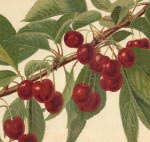 Description: |
Prunus avium Hedelfingen | details |
| 8. | Cherry Van, on rootstock Colt Description: |
Prunus avium Van | details |
| 9. | Cider Gum Description: Eucalyptus gunnii or Cider Gum is an evergreen tree native to Southern Australia and Tasmania. In its natural habitat it can reach up to 100 feet (30 m) tall. The branches are upswept and the bark is smooth green and white. Young leaves are leathery, glaucous blue and rounded to oblong and 2.5-5cm wide. The adult leaves are greenish to 4 inches (10 cm) long and narrowly to broadly lanceolate. When leaves are crushed they are heavily scented. The trees bloom in April to June with very small creamy white blooms in clusters of 2-3. When left to its own devices, it quickly turns into a substantial tree with flaking, coloured bark giving an elegant effect. When burnt on an open fire, the flaked bark gives off a delightful fragrance. Eucalyptus gunnii need full sun to partial shade when young and full sun when adult. Trees are hardy only down to -12° till -15°C (exceptionally −20 °C for brief periods), therefore in Middle Europe we protect young trees for winter with thick straw or multiple unwoven textile or bubble foil layers. Or we grow them in containers and during winter month move them to cold interiors with temperatures around 9°C. Water has to be somewhat restricted during this period. These plants grow quite well on sandy/chalky soils, but prefer a loamy soil. They do not tolerate very wet sites, but generally grow on well-drained, moist but well-drained and also poorly-drained locations. In their original habitat (South Australia, Tasmania) they can be found in alpine areas on rocky well-drained soils and sometimes also on marshy soils. The substrate to be used in containers can consist of 1 part peat moss to 2 parts loam to 2 parts sand or zeolite. |
Eucalyptus gunni (Eukalyptus gunnii) | details |
| 10. | Cornelian Cherry, Dogwood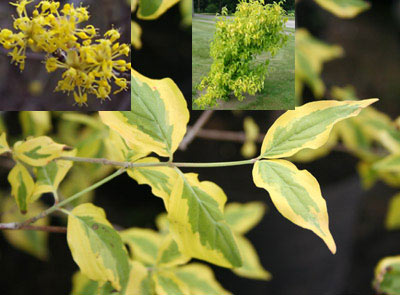 Description: A deciduous shrub with green leaves edged yellow, tinged pink, turning reddish-purple in autumn. Masses of small, spidery, yellow flowers appear in February followed by, cherry like, edible fruits. Prefers well drained soils in part shade but grows in most soils in sun or part shade. Slow growing to 1.5 to 2 metres. |
Cornus mas Aurea Elegantissima | details |
| 11. | Climbing Hydrangea Vine Description: A vigorous deciduous vine whose heart-shaped foliage and large white clusters of flowers from May to July make it an attractive covering for a wall, fence, or large tree. It clings by aerial roots. Plants have lateral branches that grow out as much as 1m from the supporting structure, giving a rich, deep texture. Its dark green leaves, are turning butter-yellow in autumn. The dried flower heads and reddish brown, peeling bark are attractive in winter. In sun or shade and in moist but well-drained soil, it will eventually grows to 9-12m or more (it's a bit slow starting). When planting more of these plants we use the spacing of 60-90 cm. Parts of plant are poisonous if ingested. This plant is attractive to bees, butterflies and/or birds. Water regularly; do not overwater. Soil pH requirements: 5.6 (acidic) to 7.5 (neutral). This plant is very winterhardy. After flowering cut back any overlong shoots to fit the allotted space. |
Schizophragma hydrangeoides moonlight | details |
| 12. | Concorde Pear Description: |
Pyrus communis Concorde | details |
| 13. | Champion Apple Description: An autumn variety appropriate for all locations. It is very fruitful and the fruit is very tasty. It is being picked in September and can be stored till February. |
Malus Champion | details |
| 14. | Courtabri Apple Description: New ornamental aplle variety with overhanging and very subtle crown. In spring it flourishes with small pink buds and middle sized white flowers. In summer the flowers develop into abundant crop of very small aplles becoming brightly shining red in September and remaining on the tree well into winter. This small apple tree also has small leaves. It is resistent against scurf disease. It is very appropriate for smaller gardens, confined places and also can be grown in containers and larger pots e.g. on patios and balconies especially as a specimen plant. It grows well in every well-drained and nutritious soil. Its crown does not grow much higher anymore therefore the small tree remains almost of the same size. |
Malus Courtabri | details |
| 15. | Crimson Sentry Norway Maple Description: This fully hardy and broadly columnar tree attracts attention by its dark red-purple leaves turning red, brown and orange in autumn. It makes an excellent specimen tree for a medium-sized garden. Would also make a stunning avenue. It is pollution-tolerant and thrives on almost any soil, including clay. Grows vigorously, mainly on fertile, moist and well-drained soil and in sunny or partially shady position. Flowers from April to May. Its eventual height is 12m and spread 5m. |
Acer platanoides Crimson Sentry | details |
| 16. | Common Snowball, European Snowball, European Cranberrybush, Guelder Rose Description: Deciduous shrub cultivated since the 16th century with dense mound habit and upright, spreading, arching branches. Big, showy, sterile snowball like inflorescences cover the plant in May emerging light-green and changing to white, and some pink ("rose", hence ‘Roseum’). They become pendulous with their weight, highly attractive as masses of globular inflorescences amongst the expanded foliage, and persist into Summer. Leafs are opposite, 5-10cm long with good autumn color in the orange-red range, brighter than is usually true of the regular shrub, a condition which helps make up for the lack of decorative berries. It does well in sun or partial shade and is hardy from zone 4 to 8. It likes humus-rich, moist, well draining soil. Will quickly bounce back from even a hard pruning. Grows up to 3m tall and wide in a rounded shape. It is widely used as a shrub border or screen. |
Viburnum opulus Roseum | details |
| 17. | Common Box Ball on 70 cm high standard Description: |
Buxus sempervirens Ball on 70 cm Standard | details |
| 18. | Common Box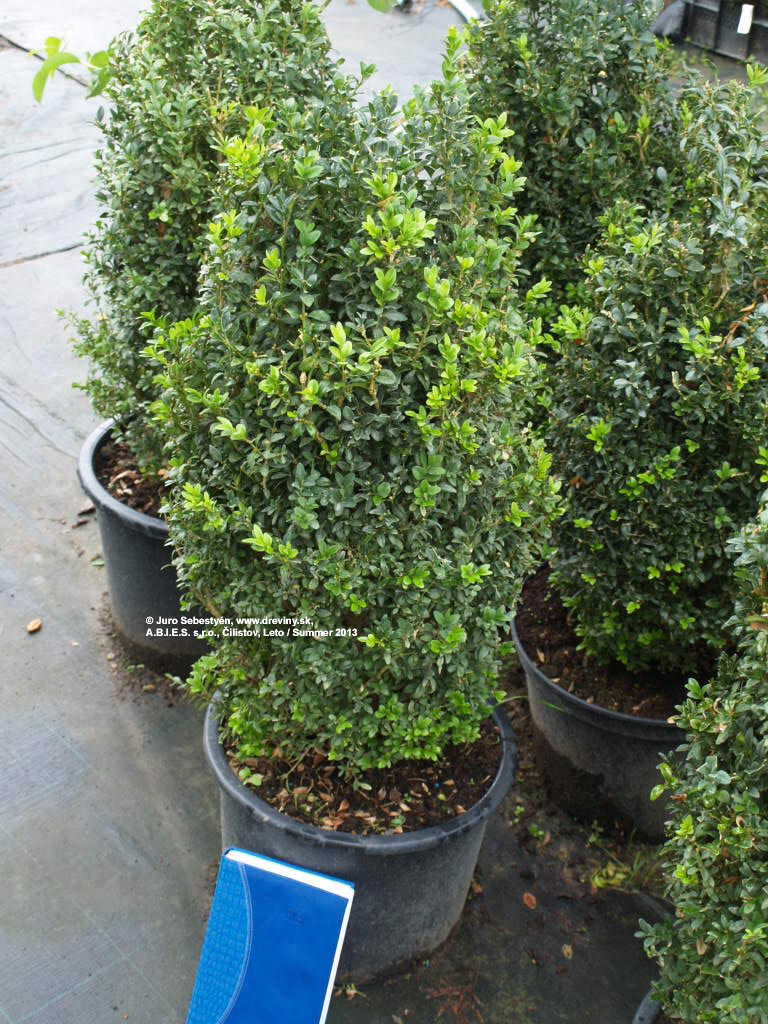 Description: |
Buxus sempervirens | details |
| 19. | Common Mulberry, Black Mulberry, Russian Mulberry, Silkworm Mulberry, Toot Tree, Persian Mulberry Description: This is the mulberry used to feed silkworms in China. This particular variety produces big berries loved by children, animals and birds alike. In maturity - after approximately 20 years of growth - it reaches a height of 6-9 metres. It is suitable for light (sandy), medium (loamy) and heavy (clay) soils and prefers well-drained soil. Grows in soils ranging from a pH of 5.5 (very acidic ranges from 5.2 to 5.5) to 8.5 (alkaline ranges from 8.1 to 8.5). |
Morus nigra | details |
| 20. | Common Mulberry, Black Mulberry, Russian Mulberry, Silkworm Mulberry, Toot Tree, Persian MulberryDescription: The black mulberry is generally considered the best tasting of the various mulberry species. It is grown for its delicious, raspberry-like fruit, mulberries. They have a unique tart-sweet taste and are eaten fresh or can be used just like any berry. The fruit, green at first, turns red then a deep, dark purple in late summer when it is ready to be picked. Black mulberry is a medium sized deciduous tree usually only to 6-9m but can reach 15m. It has heart-shaped leaves and inconspicuous flowers in late spring. Trees are fairly adaptable, but grow best in deep, moist, light soils. Mildly drought tolerant, but water should be provided during long dry spells. Plant in full sun and shelter from cold, drying winds. If we want to restrict their growth we can prune it at the end of Winter. Fertilization is generally unneccessary. Trees are known to be very long lived and can bear fruit for several hundred years. Because of its qualities black mulberry is a plant of outstanding excellence. |
Morus nigra | details |
| 21. | Coral Dawn Rose Description: Very resistant modern climbing rose. During the season flowers repeatedly with inflorescenses of coral-pink flowers 8cm in diameter. It has a robust growth and will become 4m high and 3m wide in maturity. Produces rich, healthy, dark green foliage. Grows well also on poorer soils and on shady sites. Excellent rose for training on pillars and pergolas or in patios. |
Rosa Coral Dawn | details |
| 22. | Chinese Bearberry Coral Beauty Description: This is a great ground cover plant grafted on a 80-90cm stem to produce a small, weeping tree. It is evergreen with small, shiny, green ovate-elliptic-shaped leaves and with masses of cream-white flowers in early summer, followed in the Autumn with masses of orange red berries. Cotoneaster Coral Beauty is one of the best berrying shrubs around. It produces far more berries than the natural species or other cultivars. In late Autumn and in Winter these berries are good nourishment for singing birds. The quantity of berries and the good growth of the plant should be supported by a yearly pre-spring fertilizing, especially if planted in pot. Grows well in most soils, in sun or part shade, sheltered or in high winds, dry or moist conditions. It needs regular watering to get established, but is forever after quite drought-hardy. This specific cultivar has a pleasing tendency to remain more compact than its species & is much more shiny-leafed. Ideal for rock gardens and/or as an outstanding feature in borders with low planting. For best results, remove dead and damaged growth in mid spring. |
Cotoneaster seucicus Coral Beauty na kmieniku | details |
| 23. | Cacanska Lepotica Plum Description: |
Prunus domestica Cacanska Lepotica | details |
| 24. | Common Baldcypress, Bald Cypress, Swamp CypressDescription: Baldcypress is the only conifer able to grow in water for significant periods of time and of all trees, it has perhaps the greatest known tolerance for flooding. Trees planted at Blue River reservoir in Oregon are submerged for several months each year, including about half of the growing season. Baldcypress is a large deciduous coniferous tree to 30m tall and 3m in diameter. It has brown bark brown, with long fibrous ridges peeling in strips. Twigs are very thin, flat, green, deciduous. Leaves are needlelike, crowded on thin twigs and giving a featherlike appearance. They are only 1-2 cm long, dull pale green, remaining attached to the twig which drops off in the late Autumn. At that time the leaves change their colour to beautiful orange before they fall. A valuable timber tree, its wood is extremely resistant to decay and is widely used in structures that are exposed to wet conditions. Oldest specimens in Black River Swamp in southeast North Carolina are up to 130 cm in diameter and over 1600 years old. Its roots form "knees" that extend above the water. Baldcypress is the state tree of Louisiana (Watson 1993). Baldcypress grows well in cities and is used as a landscape ornamental tree. Wet areas that are slow to drain. Does very well in peat soils. Zone 4 - 9. |
Taxodium distichum | details |
| 25. | Caucasica Cherry Laurel Description: |
Prunus laurocerasus Herbergii | details |
| 26. | Corsican hellebore Description: |
Helleborus argutifolius | details |
| 27. | Cranesbill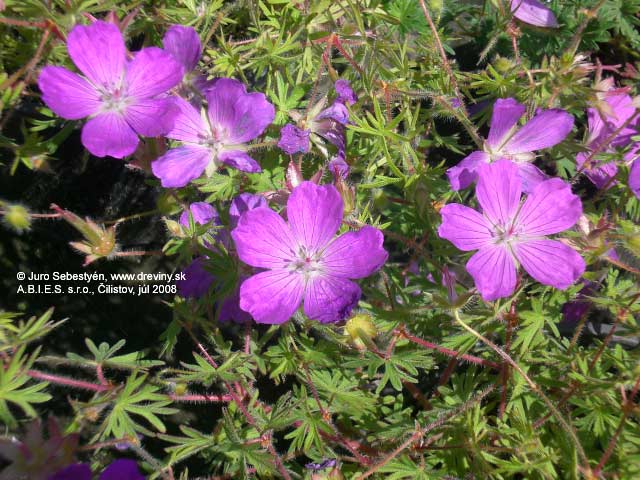 Description: |
Geranium sanquineum Vision | details |
| 28. | Candle Larkspur, Hybrid Bee Delphinium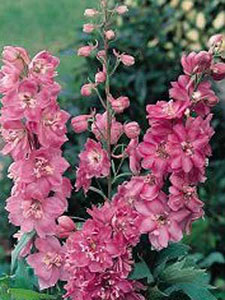 Description: |
Delphinium elatum Pacific Astolat | details |
| 29. | Common Balm, Lemon Balm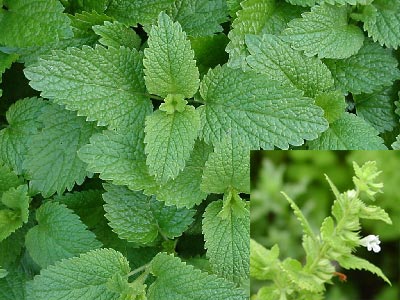 Description: |
Melissa officinalis | details |
| 30. | Common Male Fern, Male Fern Description: Dryopteris filix-mas (Common Male Fern or Male Fern) is one of the most common ferns of the temperate Northern Hemisphere. It is deciduous or semi-evergreen and can grow to 1.2 metres in height and 1metre in diameter. It has elegantly arching mid-green and fairly robust foliage. It favours damp shaded areas and is particularly ubiquitous in the understory of woodlands, but also found in shady places on hedge-banks, rocks and screes. The half-evergreen leaves have an upright habit and reach a maximum length of 1.5 m. The stalks are covered with orange-brown scales. Can be grown even by beginners in partial shade or shade a and it is able to withstand a sunnier site and drier soil than most hardy ferns, making it more suited to the rough and tumble of border life. It is hardy and thrives on well-drained/light, acidic or chalky/alkaline, moist soils. Used between shrubs or tall flowers in borders for summer-long foliage interest, or in woodland and wild gardens in clumps under trees in mild locations the foliage may remain standing all winter, but elsewhere it dies down. However it is at its happiest in a cool shady sheltered humus-rich situation in the company of other hardy ferns and herbaceous flowers. |
Dryopteris filix mas | details |
| 31. | Chinese Astilbe Superba Description: Easily grown in average, medium, well-drained soils in part shade to full shade. Prefers moist, humusy, organically rich soils. Soils must not be allowed to dry out. If regularly watered, foliage will usually remain attractive throughout the growing season. A summer compost mulch helps retain soil moisture. Chinese astilbes are generally noted, however, for having better sun and drought tolerance than other species of astilbe. Removing faded flower stalks will not prolong bloom but may improve plant appearance, particularly if a ground cover look is desired. On the other hand, many gardeners leave the flower stalks in place after bloom because of the continuing ornamental interest of the dried seed heads. Astilbes are mainstays of shade and woodland gardens. This astilbe is a bold, very tall plant (100cm) which features a dark green foliage, dense panicles of rose-purple flowers on hairy stems. Blooms in early to mid-summer (june to september) and we plant 9 pcs/m2. |
Astilbe chinensis Superba | details |
| 32. | Compacta Dwarf Swordleaf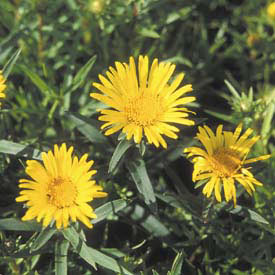 Description: |
Inula ensifolia Compacta | details |
| 33. | Columnar White Pine Description: Small to medium size rapidly growing tree with columnar shape in which the branches all ascend upwards. It is rather graceful especially as it opens up and spreads out as it ages. Growth is very rapid first but slows down with age. Although it can grow up to 15-20m tall with 1m diameter trunk its spread is limited to 4-5m only. Bluish-green needles are very soft and in bundles of 5. The grey bark on the trunk and large branches remains unusually smooth through middle age, breaking up into elongated blocks in old age. Light brown cones are attractive to birds, showy and persistent on the tree. Easily grown in average, medium, well-drained soil in full sun to part shade (minimum pH 5.6, maximum pH: 7.5). Cold tolerant but intolerant of air pollutants such as ozone and sulfur dioxide. Follow a regular watering schedule during the first growing season to establish a deep, extensive root system. Water regularly, when top 10cm of soil is dry. Watering can be reduced after establishment. Used for small groupings or as a specimen. Also may be planted as a screen. Narrow growth habit allows siting in smaller spaces. |
Pinus strobus Fastigiata | details |
| 34. | Common Box Spiral Description: |
Buxus sempervirens Spiral | details |
| 35. | Chilean Wintergreen Description: If you're looking for a plant that gives good winter color with its berries, try Gaultheria mucronata also known as Pernettya mucronata. Its common name is Prickly Heath, and it's an evergreen shrub that does well in climate zones up to USDA Zone 7a i.e. with average lowest temperature of -17.7 °C (0 °F). Grows best on acid soils with pH value 5.1 to 5.5 (strongly acidic) or 5.6 to 6.0 (acidic). Grows up to 5 feet (1.5 m) tall and as wide, with deep green, glossy leaves with sharp tips. It bears clusters of small white flowers from May to June. The flowers are dioecious (individual flowers are either male or female, but only one sex is to be found on any one plant so both male and female plants must be grown if seed is required) and are pollinated by Insects. The best is to grow 5-6 pcs. The plant is not self-fertile. After flowers it has purple fruit (The seeds ripen from October to December). Fruit is edible. Raw or cooked. The fruit of some forms is juicy, has a very pleasant slightly sweet flavour and makes a very good dessert fruit. The fruit is up to 12 mm in diameter. The plant can be used to make a low hedge. A good ground cover plant for a sunny position, forming dense thickets. They are best spaced about 60 cm apart each way. Plants can be cut back in the spring if they are becoming too lanky and open in growth. The plant prefers light (sandy) and medium (loamy) soils and requires well-drained soil and can grow in acid to very acid soil. It can grow in semi-shade (light woodland) or no shade. |
Pernettya mucronata | details |
| 36. | Caucasian Wingnut Description: Caucasian wingnut grows in mixed forests near rivers in boggy or inundated areas and can grow up to 30m high. A very ornamental, fast growing, large and broadly oval deciduos tree, which does well in most fertile, moisture-retentive soils, but is especially good for use close to rivers and lakes in a parkland setting. It can be used as shade tree for the large property only. Can be integrated in to golf courses, campuses, office parks, or municipal parks. It grows to a considerable size and provides shade quickly. Has definite use as a recovery tree in order to revegetate an area quickly. In spite of extraordinary fast growth, it is strong wooded and not prone to breakage. Its wood, although soft, is hard to split and is used for production of matches, shoes etc. Tends to grow as a multiple trunked tree, but can be pruned to a single trunk if diligent pruning is applied for the first 5 years. It is considerably frost resistant and can be grown up to USDA zone 5a, i.e. in areas with winter frosts up to -28.8 °C. It is tolerant of drought, and different soil types with soil pH requirements ranging from 5.1 (strongly acidic) to 8.5 (alkaline). It prefers medium (loamy) and heavy (clay) soils. It has deeply furrowed aromatic bark and very long summer catkins, which produce two-winged nut fruits. It is in flower in June, and the seeds ripen from October to December. |
Pterocarya fraxinifolia | details |
| 37. | Creeping Dogwood, Bunchberry Dogwood, Dwarf Cornel Description: |
Cornus canadensis | details |
| 38. | Coral Bark Japanese Maple, Sango Kaku Japanese Maple, Sango Kaku Maple, Senkaki Japanese Maple, Description: This Japanese maple is formerly known as Acer palmatum Senkaki. It is very attractive during all seasons. In spring the leaves are a lively pinkish green, slowly turning a rich green in summer and in the autumn they welcome with orange highlights. In winter the bark on all its younger shoots and branches turns conspicuously coral red. It requires sun to modest shade, in moist, well-drained soil. Tolerates a range of soils, including sand and heavy clay, and it is drought-tolerant. It is hardy plant growing in USDA temperature zones from 9a to 4a (average lowest winter temperature to -34.4 °C (-30 °F)). Grows up to 6 metres high and 3 metres wide. The Royal Horticultural Society has given it the prestigious Award of Garden Merit. It´s common name is Coral Bark Japanese Maple. |
Acer palmatum Sango Kaku (Senkaki) | details |
| 39. | Calamondin, Panama Orange, Scarlet Lime, Golden Lime Description: Calamondin is a beautiful ornamental tree originating in China. It is grown more for its looks than for its fruit. It performs well as a patio plant or as a hedge when trimmed. It also makes a good potted plant often seen indoors or under glass. May be trained as a bonsai. The calamondin has a dense, evergreen foliage. Dark-green leaves with a rounded tip are smaller than most citrus leaves. This attractive plant flowers in spring and early summer with a mass of fragrant, white blossom followed by small, 3-5cm long yellow to orange fruits. The juice of the calamondin can be used like lemon or lime to prepare refreshing beverages, to flavor fish, to make cakes, marmalades, pies, preserves, sauces and to use in soups and teas. Grows well in full-sun in well-drained fertile soil. It is moderately drought-tolerant. During summer, potted plant should be placed outdoors in a sunny, sheltered spot such as a south-facing patio. Cold resistant up to -6°C. |
Citrus Calamondino (Citrus mitis, Citrus madulensis) | details |
| 40. | California Insence Cedar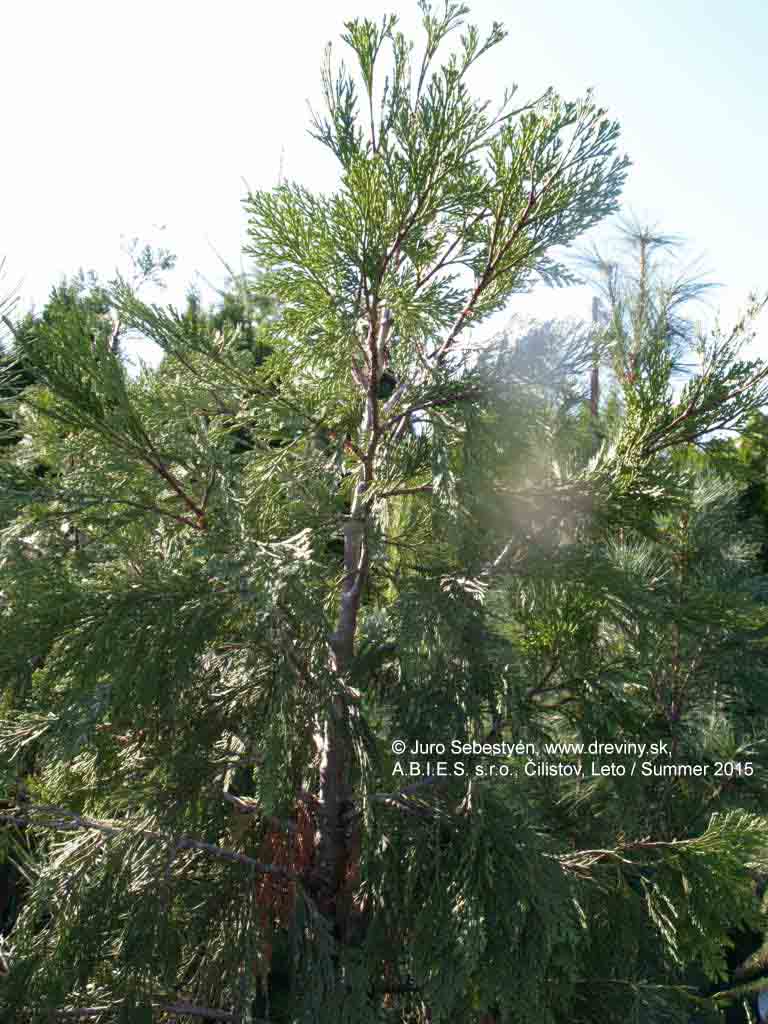 Description: This large, conical-shaped evergreen tree is a species of conifer native to western North America. Its wood is the primary material for wooden pencils, because it is soft and tends to sharpen easily without forming splinters. The tree has irregularly angled trunk and narrow, conic crown, therefore it makes an attractive single specimen or smaller stand of trees. It is also grown as ornamental tree. Since it grows into heights it doesn’t require much space around. Young trees might be sensitive to frost, grown-up trees however, fully tolerate frost. The bark is orange-brown weathering grayish, smooth and thin at first. The foliage is produced in flattened sprays with dark green, scale-like leaves 3–14 mm long. The leaves are aromatic and they attract butterflies. The seed cones are 20–35 mm long, pale green to yellow, the pollen cones are of smaller size, 6–8 mm long. Recommended planting in sun or part shade in just about any well-drained soil. Once established, incense cedar needs very little water, thrives in poor soils, and doesn’t need fertilizer. It is a small grower reaching up to 20m. |
Calocedrus decurrens | details |
| 41. | Common Holly Blue Prince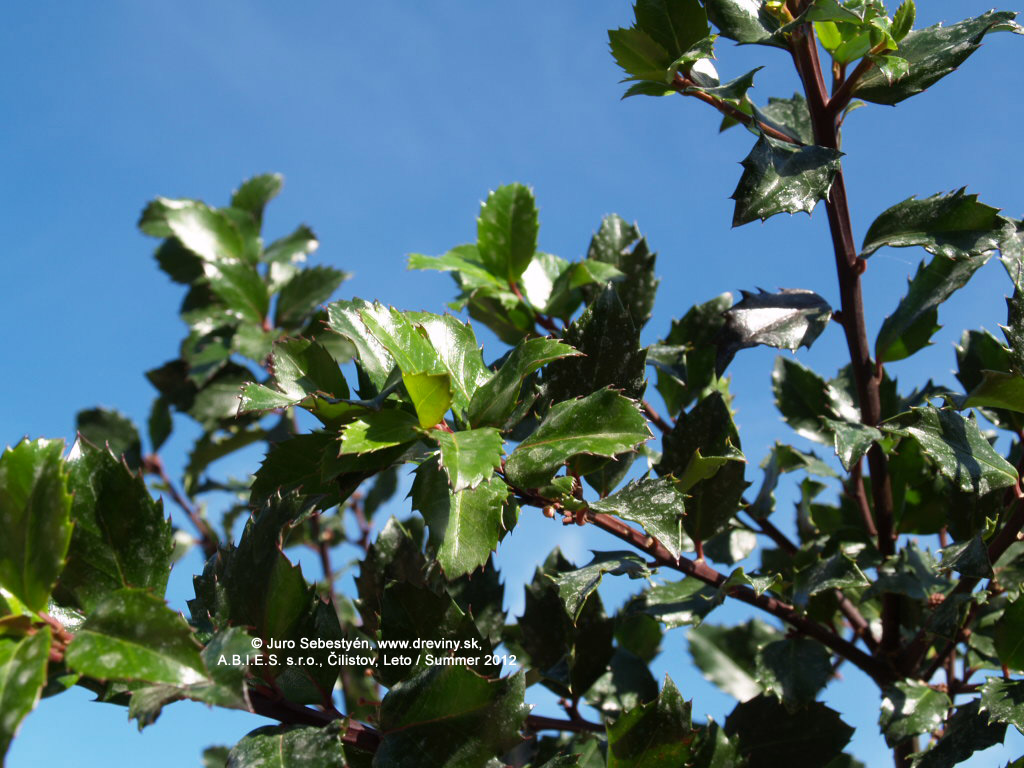 Description: |
Ilex aquifolium Blue Prince | details |
| 42. | Cumulus Apple Description: |
Malus domestica Cumulus | details |
| 43. | Common Privet, European Privet Description: |
Ligustrum vulgare | details |
| 44. | Cotali Cotoneaster on standard 80cm high Description: One of the most beuatiful upright Cotoneaster varieties grafted on a 80cm high standard to produce a small tree and to display the small straight branches at their best. Its small bright and shiny green ovate-elliptic leaves are significantly larger than in case of other varieties. It well resists the first frosts and the plant remains green for a long periods of Autumn. Numerous white flowers with a pink tinge appear in May or June and are followed in autumn by a flood of red berries which are also remarkably large for the species. This Cotoneasters is able to grow in most difficult situations and provide garden with rare winter colour. It can be planted in any soil in full sun or partial shade. It is very hardy and can survive temperatures below 26 degress Celsius. Special care is not necessary. Every four years you can make it appear younger by cuting out several older branches. This will help to improve plants health and shape. Ideal for the patio or balcony as it never grows very high (max. to 2m). |
Cotoneaster praecox (suecica, adpressus) Cotali | details |
| 45. | Coltsfoot, Tash Plant, Ass's foot, Bull's foot, Butterbur, Coughwort, Farfara, Foal's foot, Foalswort, Horse Foot, Winter Heliotrope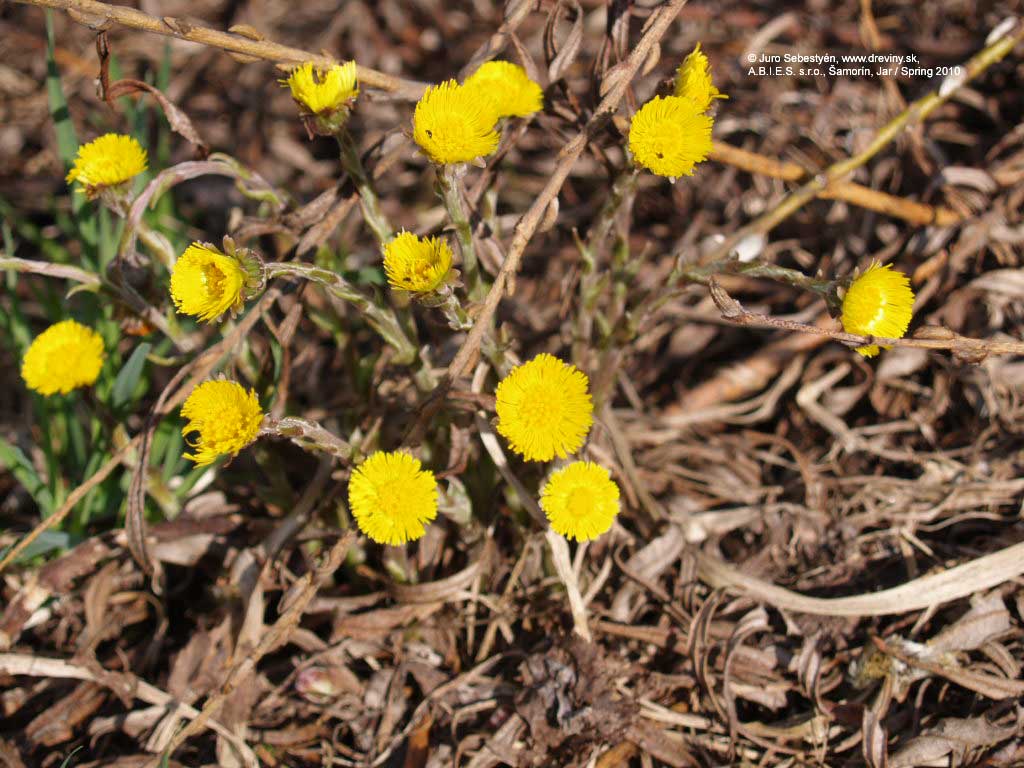 Description: |
Tussilago farfara | details |
| 46. | Cedar of Lebanon, subspecies Atlantica Description: One of most beautiful conifers used in garden design for its sculpted splendour mostly as an attractive specimen in larger lawns. The top of the Lebanon cedar is broad and flattened in a mature tree. In dense stands of trees it grows straight and narrow, but when standing alone, its lower branches spread out horizontally over a large area and rest on the ground. The cedars can grow 20 m tall and spread out from 9-15 m. They grow slowly. The oldest tree is more than 1000 years old. The needles of the Lebanon cedar look like those of the Larch, except that they are evergreen. The needles are grouped in tufts of 30-40. They are a dark blue-green color, and stay attached to the tree for 2 years. The Lebanon cedar doesn't flower until it is 25-30 years old. The cones become 10-12 cm long and stand up straight on the branch. Young cones are light green in colour. Female cones are barrel-shaped and dull brown. The Lebanon cedar is not tolerant of strong air pollution. It is however the most cold hardy of cedars as it grows in zones 5-7. Does not tolerate shade but after taking roots grows well also in dry soils. |
Cedrus Atlantica | details |
| 47. | Cherry Stella Description: |
Prunus avium Stella | details |
| 48. | Caucasian Fir, Nordman Fir Description: |
Abies nordmanniana | details |
| 49. | Common Box - Cone Description: Stylish cone made of box suitable for romantic and classic gardens or for representative premises. It is also very suitable for border edges and for terraces and balconies. Throughout the year it decorates any area with its fresh green colour of its tiny evergreen leaves. We clip it 1-2 times a year (in spring and / or until the end of September) or more times throughout the season when necessary. It grows best on well drained, light and nutritious soil. Especially in containers by regular watering we try to prevent the soil from drying out completely. In pots or containers it has also to be fertilised each year - preferably with fertilisers having a long period of nutrients release (e.g. Osmocote or Proven Winners brands). We define the final height and spread of the cone ourselves by frequency and intesity of clipping. THESE PLANTS ARE WELL-ROOTED IN POTS YOU CAN THEREFORE PLANT THEM THROUGHOUT THE YEAR. |
Buxus sempervirens | details |
| 50. | Crimson King Norway Maple Description: A large handsome, vigorous, spreading deciduous tree with conspicuous clusters of yellow flowers on bare stems in April followed by outstanding deeply lobed leaves which open bright red turning to rich dark crimson. Probably the most vigorous of red-leafed forms. Purple-red leaf (maroon) for most of the growing season, reddish-orange in fall. Flowers maroon-yellow and fruit also purplish. Hardy to USDA Zone 4. Grows on alkaline, acid, sandy and loamy soil. Suitable for street tree rows and planted as specimen. It reaches the height of 7m and width of 5m in 20 years. The ultimate height is 12m or more. |
Acer platanoides Crimson King | details |
| 51. | Coral Crug Climbing Hydrangea Vine Description: The climbing hydrangea Crug Coral is a fast-growing climbing woody plant with deciduous green heart-shaped leaves. In summer, it produces pale red flowers that fade to pink or cream over time. It is very suitable for covering fences, walls or large trees. It climbs on different surfaces using its aerial roots. It grows on loamy, sandy and clay soils, which must have an acidic or neutral pH. It thrives in the sun, in partial shade to shade. In slightly moist but well-drained soils, it will grow to a height of 10-14 m and a width of 2.5 to 4 meters in 10 years (it grows a little slower at first). When planting several plants of this species, we maintain a distance of at least 100-150 cm between individual plants. The climbing hydrangea is attractive to bees, butterflies and / or birds. We water it regularly, but not too much. Its soil pH requirements range between 5.6 (acidic soil) and 7.5 (neutral soil). It is very frost-resistant. After flowering, we cut off all the shoots that are too long so the plant fits in its place again. |
Hydrangea anomala subsp. glabra Crug Coral | details |
| 52. | Creeping Norway Spruce Description: |
Picea abies Repens | details |
| 53. | COx Reneta/ Orange Pippin Apple Description: |
Malus domestica Cox´s Orange Pippin (Pipin) | details |
| 54. | Cut Leaved Alder, Fern Leaved Alder Description: |
Alnus glutinosa Imperialis | details |
| 55. | Cedar of LebanonDescription: One of most beautiful conifers used in garden design for its sculpted splendour mostly as an attractive specimen in larger lawns. The top of the Atlas cedar is broad and flattened in a mature tree. In dense stands of trees it grows straight and narrow, but when standing alone, its lower branches spread out horizontally over a large area and rest on the ground. In its homeland the mature Atlas cedar grows in maturity to 30-35 metres tall and spreads out to 15-20 metres. Growth is slow and it takes approximately 100 years to reach these proportions. The oldest tree is more than 1000 years old. The needles of the Atlas cedar look like those of the Larch, except that they are evergreen. The needles are grouped in tufts of 30-40. They are a dark blue-green color, and stay attached to the tree for 2 years. The Lebanon cedar doesn't flower until it is 25-30 years old. The cones become 10-12 cm long and stand up straight on the branch. Young cones are light green in color. Female cones are barrel-shaped and dull brown. The Atlas cedar is not tolerant of strong air pollution. It is however quite cold hardy and grows even in areas with average lowest winter temperatures of up to minus 23 degrees Celsius. Does not tolerate shade but after taking roots grows well also in dry soils. |
Cedrus libani subps. atlantica | details |
| 56. | Common Box Pom Pom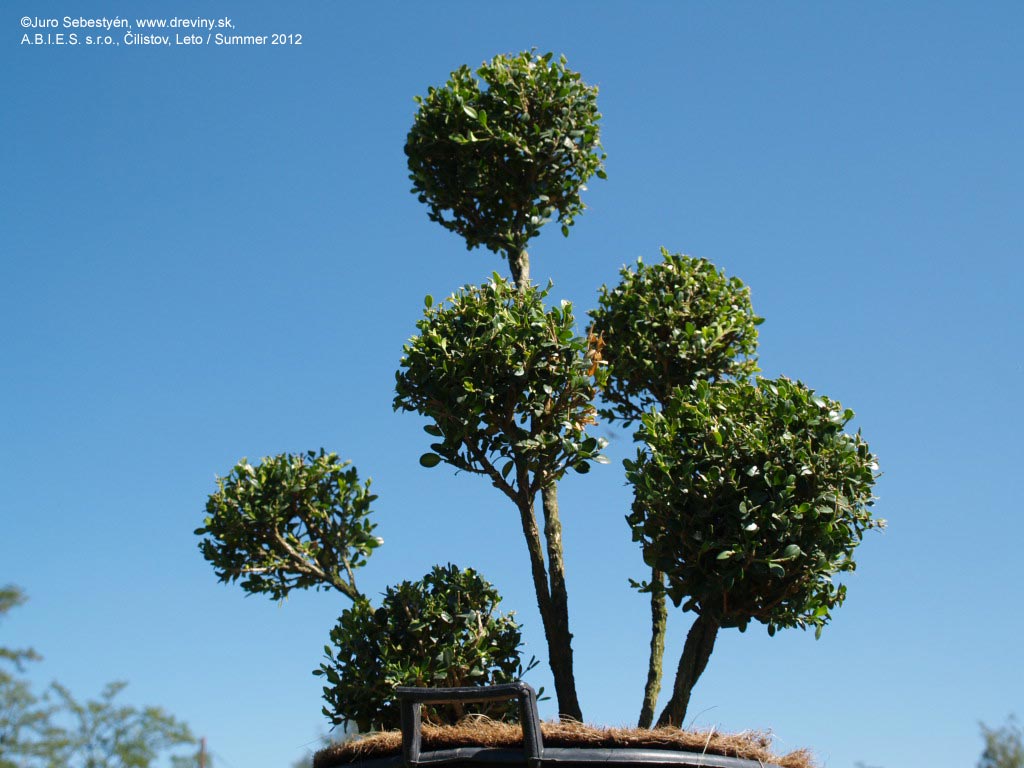 Description: |
Buxus sempervirens POM POM | details |
| 57. | Columnar Irish Yew Description: Taxus baccata Fastigiata is an extremely useful evergreen narrow conifer for sun or shade. Most commonly used for hedging purposes, it has a naturally upright narrow columnar form and takes shearing well. Its dense form and dark green color makes a matte-green dramatic backdrop for a perennial or mixed shrub border and a fine support for clematis. Irish yews are often used individually to add height and winter structure to the garden as a vertical exclamation point or paired to set off an entryway. As yews are among the few conifers that thrive in dry shade, they can be used to provide a textural contrast to other plants in a shady garden. This striking, slow-growing yew is one of the best garden yews as it will take many years to outgrow its position. It naturally makes a good shape without any clipping or trimming. Fastigiata is a female clone, so it bears small red fruit. Yew bark, foliage, and fruit can be toxic, so site plants with care. Like all yews (but unlike most conifers), it can be pruned back to old wood and will resprout readily. It's a tough plant, needing no supplemental water once it's established. Taxus baccata Fastigiata will reach 2 to 2.5m high by 0.5-0.6m wide in ten years. Ultimately, it can reach up to 4-6m high and 0,8-1m wide if left unpruned. For hedges with required height of 2m we set 2-3 plants on current meter. Trim in September. Hardiness USDA zones 6 to 9. It grows well on exposed/windy or dense shade locations and trives also on a chalky soil. |
Taxus baccata Fastigiata Robusta | details |
| 58. | Common Lilac Primrose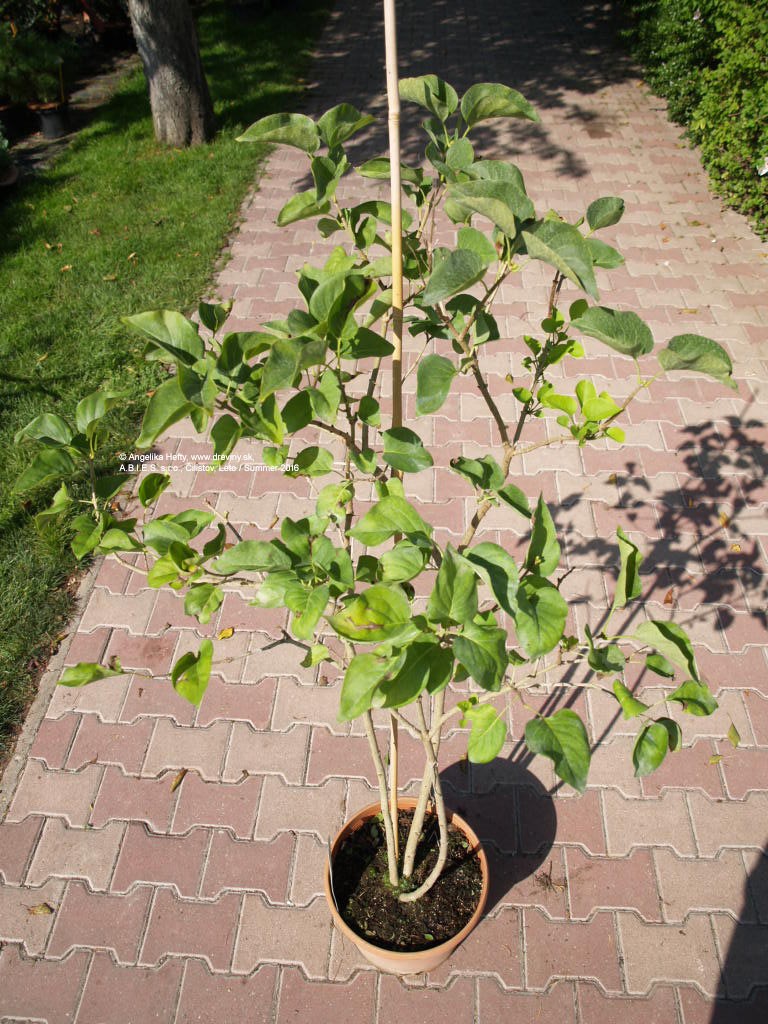 Description: This unique cultivar bears slightly fragrant, creamy yellowish blossoms in midseason. It forms a shrub 12 feet high by 8 feet wide. Grow in reasonably fertile, well-drained soil in full sun; prefers neutral to slightly alkaline soil. Promptly deadhead spent blossoms to produce more robust blooms for the following year. Prune lightly or renovate in late winter or early spring to maintain a healthy framework. |
Syringa vulgaris Primrose | details |
| 59. | Conference Pear, Konferenz Pear Description: |
Pyrus communis Conference | details |
| 60. | Common Medlar Description: The Common Medlar is a large shrub or small tree. In Middle Europe it grows up to 3 metres tall. It has luxuriant dark green foliage, elliptic, 8–15 centimetres long and 3–4 centimetres wide. The leaves turn a spectacular red in autumn before falling. The five-petalled white or pinkish flowers are produced in from May to June. The reddish-brown medlar fruit is a pome, 2–3 cm diameter. Common Medlar fruit are very hard and acidic and they ripen in November. They become edible after being softened by frost, or naturally in storage given sufficient time. Once softening begins the skin rapidly becomes wrinkled and turns dark brown, and the inside reduces to the consistency and flavour reminiscent of apple sauce. This can be a cause of confusion to new medlar consumers, as a softened medlar can give the appearance that it has spoiled. It becomes however quite sweet with an absolutely delicious flavour that somewhat resembles a luscious tropical fruit. The Common Medlar was already being cultivated about 3000 years ago in northern Iran. It was introduced to Greece around 700 BC and to Rome about 200 BC. It was an important fruit plant during Roman and medieval times. By the 17th and 18th century, however, it had been superseded by other fruits, and is very rarely cultivated today. Common Medlar is one of the few fruit that becomes edible in winter, and an important tree for gardeners who wish to try and have fruit available all year round. The seeds contain the toxic hydrocyanic acid and should not be eaten in quantity. It is hardy to zone 6. It is in flower and the seeds The flowers are hermaphrodite (has both male and female organs) and are pollinated by Bees. Therefore the plant is self-fertile. It is able to grow on any type of soil - acid, neutral or basic (alkaline) and light (sandy), medium (loamy) and heavy (clay) soils but grows best on well-drained soils. It requires warm summers and mild winters and prefers sunny, dry locations. It can grow in semi-shade (light woodland) or no shade. The plant tolerates strong winds. In Summer its ramified branches serve as hidding places for many birds and other animals and in winter the fruit is eaten by variety of different birds. |
Mespilus germanica | details |
| 61. | Common Mulberry, Black Mulberry, Russian Mulberry, Silkworm Mulberry, Toot Tree, Persian MulberryDescription: This is the mulberry used to feed silkworms in China. This particular variety produces big berries loved by children, animals and birds alike. In maturity - after approximately 20 years of growth - it reaches a height of 6-9 metres. It is suitable for light (sandy), medium (loamy) and heavy (clay) soils and prefers well-drained soil. Grows in soils ranging from a pH of 5.5 (very acidic ranges from 5.2 to 5.5) to 8.5 (alkaline ranges from 8.1 to 8.5). |
Morus nigra | details |
| 62. | Cherry Kordia Description: |
Prunus avium Kordia | details |
| 63. | Common Grape Vine Vostorg Description: |
Vitis vinifera Vostorg | details |
| 64. | Common Box, European Box, Boxwood Description: |
Buxus sempervirens | details |
| 65. | Cotoneaster Skogholm, Bearberry Cotoneaster Skogholm Description: Evergreen, fast growing first-class ground cover with oval, glossy, bright green narrow leaves and bright red fruit. Excellent for banks, slopes or even a low facer for shrub borders. The late spring flowers are not very showy, but they produce shiny, red fruit. Entirely frost hardy, this cultivar will grow 40-90 cm high and can spread 1m each year. The vertical shoots should be cut off as to maintain a ground cover effect. Skogholm was cultivated in Sweden and came into the market about 1950. |
Cotoneaster dammeri (suecicus) Skogholm | details |
| 66. | Captivator Gooseberry Description: |
Grossularia albus Captivator | details |
| 67. | Cherry VanDescription: |
Prunus avium Van | details |
| 68. | Coral Beauty Bearberry Cotoneaster Description: |
Cotoneaster dammeri (suecica) Coral Beauty | details |
| 69. | Compacta Apricot Description: |
Prunus armenica Compacta | details |
| 70. | Columnar White PineDescription: |
Pinus strobus | details |
| 71. | Corylus maxima Red Filbert, Purple Leaved Filbert nut Description: The Red Zellernut variety produces long pinkish purple catkins in early Spring and large purple leaves in Summer. The edible nuts ripen in late summer and are also purple, thus providing for additional interest and taste. The are round and grow up to 1.8 centimeters. Their crop is rich and regular. The Red Zellernut variety grows broadly upright when young and later develops to broadly umbrella-like shaped shrub. It grows up to 3-5 meters high and 1.5-2 meters wide in maturity. It is often used as a specimen, in mixed borders or planted to form pruned or free-growing hedges. Grows best in full sun or partial shade in any fertile soil. To achieve higher crops we can plant another variety close to the Red Zellernut. |
Corylus maxima Red Zellernut (Rote Zellernuss, Rode Zellernoot) | details |
| 72. | Cherry Meteor Korai Description: |
Prunus cerasus Meteor Korai | details |
| 73. | Cherry Techlovan Description: |
Prunus avium Techlovan | details |
| 74. | Common Mulberry, Black Mulberry, Russian Mulberry, Silkworm Mulberry, Toot Tree, Persian MulberryDescription: This is the mulberry used to feed silkworms in China. This particular variety produces big berries loved by children, animals and birds alike. In maturity - after approximately 20 years of growth - it reaches a height of 6-9 metres. It is suitable for light (sandy), medium (loamy) and heavy (clay) soils and prefers well-drained soil. Grows in soils ranging from a pH of 5.5 (very acidic ranges from 5.2 to 5.5) to 8.5 (alkaline ranges from 8.1 to 8.5). |
Morus nigra | details |
| 75. | Champion Apple Description: An autumn variety appropriate for all locations. It is very fruitful and the fruit is very tasty. It is being picked in September and can be stored till February. |
Malus Champion | details |
| 76. | Climbing Hydrangea Vine Description: A vigorous deciduous vine whose heart-shaped foliage and large white clusters of flowers from May to July make it an attractive covering for a wall, fence, or large tree. It clings by aerial roots. Plants have lateral branches that grow out as much as 1m from the supporting structure, giving a rich, deep texture. Its dark green leaves, are turning butter-yellow in autumn. The dried flower heads and reddish brown, peeling bark are attractive in winter. In sun or shade and in moist but well-drained soil, it will eventually grows to 9-12m or more (it's a bit slow starting). When planting more of these plants we use the spacing of 60-90 cm. Parts of plant are poisonous if ingested. This plant is attractive to bees, butterflies and/or birds. Water regularly; do not overwater. Soil pH requirements: 5.6 (acidic) to 7.5 (neutral). This plant is very winterhardy. After flowering cut back any overlong shoots to fit the allotted space. |
Hydrangea anomala petiolaris | details |
| 77. | Crimson Sentry Norway MapleDescription: This fully hardy and broadly columnar tree attracts attention by its dark red-purple leaves turning red, brown and orange in autumn. It makes an excellent specimen tree for a medium-sized garden. Would also make a stunning avenue. It is pollution-tolerant and thrives on almost any soil, including clay. Grows vigorously, mainly on fertile, moist and well-drained soil and in sunny or partially shady position. Flowers from April to May. Its eventual height is 12m and spread 5m. |
Acer platanoides Crimson Sentry | details |
| 78. | Common Baldcypress, Bald Cypress, Swamp Cypress Secrest Description: Baldcypress is the only conifer able to grow in water for significant periods of time and of all trees, it has perhaps the greatest known tolerance for flooding. Trees planted at Blue River reservoir in Oregon are submerged for several months each year, including about half of the growing season. Baldcypress is a large deciduous coniferous tree to 30m tall and 3m in diameter. It has brown bark brown, with long fibrous ridges peeling in strips. Twigs are very thin, flat, green, deciduous. Leaves are needlelike, crowded on thin twigs and giving a featherlike appearance. They are only 1-2 cm long, dull pale green, remaining attached to the twig which drops off in the late Autumn. At that time the leaves change their colour to beautiful orange before they fall. A valuable timber tree, its wood is extremely resistant to decay and is widely used in structures that are exposed to wet conditions. Oldest specimens in Black River Swamp in southeast North Carolina are up to 130 cm in diameter and over 1600 years old. Its roots form "knees" that extend above the water. Baldcypress is the state tree of Louisiana (Watson 1993). Baldcypress grows well in cities and is used as a landscape ornamental tree. Wet areas that are slow to drain. Does very well in peat soils. Zone 4 - 9. |
Taxodium distichum Secrest | details |
| 79. | Cherry Silvia Description: |
Prunus avium Silvia (Sylvia) | details |
| 80. | Castanea sativa x molissima Bouche de Bétizac Description: Chestnuts are moderate to fast growers and quickly become an important landscape feature in your yard, increasing your home’s value and helping to reduce global warming by sequestering excess carbon in the atmosphere. Plant at least 2 different varieties for cross pollination. Research suggests that insects play a significant role in pollination. Chestnuts are moderately drought tolerant once established, though young trees require weekly irrigation. They perform well in soils of moderate fertility, including sandy loam. Chestnuts are intolerant of alkaline soils, growing well in acidic soils with a pH between 4.5 and 6.5. They like hot summers and are well-adapted to arid environments and humid climates. Castanea sativa 'Bouche de Bétizac' Ce croisement de Castanea Sativa et Castanea Crenata a été obtenu en 1962 par l'INRA en Corrèze. Espèce vigoureuse et de croissance rapide, il atteint 4 mètres de haut sur 2 mètres de large. Il a une forme érigée. Les feuilles sont caduques et de grande taille, très dentées, de forme allongée. La couleur est vert foncé brillant, puis jaune doré en automne. Abondante floraison couleur crème entre juin et août. Les châtons mâles et les fleurs femelles sont présentes sur le même arbre, mais ne se fécondent pas. Le châtaignier n'est pas autofertile: il a besoin de la présence d'autres variétés pour être pollinisé. Castanea sativa 'Bouche de Bétizac' ne produit pas de pollen (variété astaminée): elle est bien pollinisée par les variétés telles que Belle épine, Marron de Goujounac et Marron de Chevanceaux. Les châtaignes, à la chair comestibles se récoltent en octobre. Les châtaignes 'Bouche de Bétizac' sont de grosse, voire très grosse taille. Ce sont des châtaignes brillantes, de couleur châtain rouge, puis marron, brun foncé. Elles ont une très bonne saveur et se consomment très bien grillées ou bouilles. Elles se conservent cependant moyennement. Ce châtaignier a une très bonne productivité, précoce, régulière. Il a la particularité d'être peu sensible aux maladies classiques du Châtaignier (chancre et cynips du Châtaignier). On plante le Châtaignier 'Bouche de Bétizac' dans un sol acide, bien drainé, qui peut être pauvre et sec. Bannir les sols calcaires. Une exposition ensoleillée est recommandée, plutôt au sud de la Loire (craint les très grands froids). Cette espèce est une des plus cultivées en chataigneraie en France pour sa qualité et l'abondance de ses fruits. |
Castanea sativa x molissima Bouche de Bétizac | details |
| 81. | Chestnut Precoce de Migoule Description: |
Castanea sativa Precoce de Migoule | details |
| 82. | Cider GumDescription: Eucalyptus gunnii or Cider Gum is an evergreen tree native to Southern Australia and Tasmania. In its natural habitat it can reach up to 100 feet (30 m) tall. The branches are upswept and the bark is smooth green and white. Young leaves are leathery, glaucous blue and rounded to oblong and 2.5-5cm wide. The adult leaves are greenish to 4 inches (10 cm) long and narrowly to broadly lanceolate. When leaves are crushed they are heavily scented. The trees bloom in April to June with very small creamy white blooms in clusters of 2-3. When left to its own devices, it quickly turns into a substantial tree with flaking, coloured bark giving an elegant effect. When burnt on an open fire, the flaked bark gives off a delightful fragrance. Eucalyptus gunnii need full sun to partial shade when young and full sun when adult. Trees are hardy only down to -12° till -15°C (exceptionally −20 °C for brief periods), therefore in Middle Europe we protect young trees for winter with thick straw or multiple unwoven textile or bubble foil layers. Or we grow them in containers and during winter month move them to cold interiors with temperatures around 9°C. Water has to be somewhat restricted during this period. These plants grow quite well on sandy/chalky soils, but prefer a loamy soil. They do not tolerate very wet sites, but generally grow on well-drained, moist but well-drained and also poorly-drained locations. In their original habitat (South Australia, Tasmania) they can be found in alpine areas on rocky well-drained soils and sometimes also on marshy soils. The substrate to be used in containers can consist of 1 part peat moss to 2 parts loam to 2 parts sand or zeolite. |
Eucalyptus gunni (Eukalyptus gunnii) | details |
| 83. | Cheyenne Spirit Coneflowers Description: |
Echinacea purpurea Cheyenne Spirit | details |
| 84. | Crape myrtle Pink Description: |
Lagerstroemia indica Rosea | details |
| 85. | Crape myrtle Cyclamen Red PinkDescription: |
Lagerstroemia indica Cycl.Red-Pink | details |
Last update on:
07.11.2026 17:10:02
10% discount | Hedging plants | Climbing shrubs and plants | Trees, shrubs and bushes for half-shade | Plants for shade | Bonsai plants | Flowering plants | Plants for terraces and balconies | Evergreen plants | Miniature plants growing up to 1.5m | Conifers growing up to 1.5 - 3m | Conifers growing higher than 3m | Deciduous bushes | Deciduous plants growing up to 3m | Deciduous plants growing higher then 3m | Fruit trees and bushes | Perennials | Ground covering bushes and perennials | Trees and shrubs with ornamental fruit | With beautiful autumn leaf colour | Discounts | Having interesting winter colour or shape | Plants for acid soils | Plants for alkaline soils | Grasses | Bamboos | For rock gardens | Woody plants to lakes and streams | Water plants | Healing and aromatic plants | Citruses | Supplementary goods | Bulbs | Small trees up to 5m wide, for small gardens | Fertilizers | Christmas trees | Fruit trees | Herbs | Multi-stemmed trees |
Naši partneri:
Odborné preklady a tlmočenie, aj úradné, Bratislava
www.kochlik.sk - kvetináče
www.zavlahy-soos.sk - zavlažovacie systémy
soulbridge.sk
www.kochlik.sk - kvetináče
www.zavlahy-soos.sk - zavlažovacie systémy
soulbridge.sk
www.rastliny-semena.sk - ponuka semien a osív
www.agellus.sk - trávnaté koberce
www.eshop-kvetinace.sk
www.agellus.sk - trávnaté koberce
www.eshop-kvetinace.sk


Webstránky vytvoril www.Aweb.sk - tvorba web stránok
VITAJTE V NAŠOM ZÁHRADNÍCTVE!
PREDAJŇA ČILISTOV SHOP - otvár. hodiny / open. hours:
Po-Pia / Mon-Fri 8:00-17:00
So/Sat 8:00-16:00