30 rokov ABIES - Ďakujeme všetkým našim priateľom, rodine, zákazníkom, partnerom za doterajšiu spoluprácu a spoločný rast.
Záhradníctvo ABIES®, Labutia 18, 931 01 Šamorín, časť Čilistov
 |
 |

30 rokov ABIES
e-mail: dreviny@dreviny.sk
+421 948 937 895 (Sale of Plants)
+421 948 877 888 (Garden Design and Landscaping)
+421 903 769 164 (Sale of Plants, Landscaping)


| search on: L | records:34 |
| 1. | Leyland Cypress Description: Leyland cypress is a fast growing evergreen tree with darker green foliage. It grows at a speed of 1m a year and therefore makes an excellent hedge plant. The tree has a dense, wide-spreading shape, sometimes with more leading sprouts when left untrimmed. Thanks to his profused branching and sprouting in the lower parts of the trunk, it can be easily formed into striking shapes – spiral, pyramid, cone, ball on standard or without standard. It can also be planted as a specimen in gardens and parks or in pots e.g. on terraces. It is a very vigorous plant very suitable for creating of wind barriers or separating walls blocking out the neighbouring tall buildings. If left untrimmed, Leyland cypress usually grows up to 12-14m tall and spreads 4-5m wide in 15-20 years. It thrives in sun or part shade in any well-drained acidic or alcaline soil. Tolerates most soil types. If you wish to establish a 2m high hedge then you should plant these plants at distance of 0.7-0.8m from each other. When planting a 1.5m high hedge you can plant 3 plants per one metre. In case of an only 1m high hedge there should be 4 plants plnated per metre. Standalone plants that will never be trimmed – i.e. in wind barriers - should be planted at a mutual distance of 4-5 metres. The Leyland cypress grows well in temperature zones 6-10 and therefore can be grown successfully all over the Middle Europe with exception of coldest mountain areas. THESE PLANTS ARE WELL ROOTED IN CONTAINERS THEREFORE YOU CAN PLANT THEM THROUGHOUT THE WHOLE YEAR. |
Cupressocyparis leylandii | details |
| 2. | Leatherleaf Sedge, Fox Red Curly Sedge Description: |
Carex buchananii Red Rooster | details |
| 3. | Losan Red Currant shrub Description: |
Ribes rubrum Losan | details |
| 4. | Little Devil Rose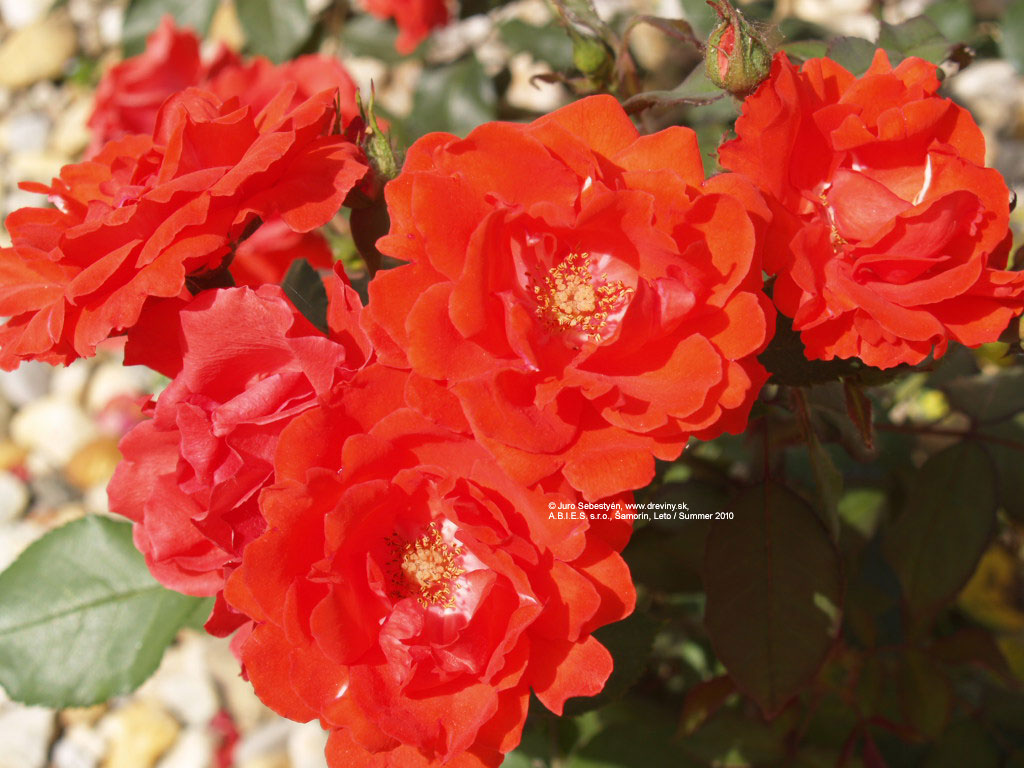 Description: Little Devil is a border shrub rose with orange to medium red blooms without fragrance. The flowers are semi-double and have an average diameter of 7cm and 9-16 petals. They appear repeatedly in flushes throughout the season from June till November. Little Devil belongs to the floribunda family of cluster flowered roses. The plant itself is bushy with compact growth habit and reaches height of 60-90cm in maturity. Spacing for planting in borders is 45-60cm. Bred in France (1961) by G. Delbard S.A. Parentage: Orléans Rose × Fashion (floribunda, Boerner, 1947). It is frost and disease resistent. The floribunda roses in general require a location in full or partial sun and grow best on moist and well drained and rich soils. We have to prune them in March or April leaving only 3-4 main branches. We remove old canes and dead or diseased wood and cut out canes that cross. When doing so we only leave 2-4 buds on each stem while the last one of them always has to face outward from the shrub. In case of 2-years old and older shrubs we cut out one of the old main branches completely in early spring to allow the shrub to regenerate regularly. |
Rosa Diablotin | details |
| 5. | Laceleaf Staghorn Sumac, Dissectum Staghorn Sumac Description: Excellent deciduous specimen tree or larger open shrub with intense orange, yellow and scarlet fall colouring on the deeply cut, fern-like foliage. It has a flat-topped crown and intriguing winter silhouette created by the upright, multi-stemmed habit. Blooms in June with large hairy pyramidal greenish yellow panicles maturing to crimson colour fruit spikes in late August and persisting through Winter. Its stout stems are hairy and aromatic. Full to partial sun. Fast grower to 3 to 3.5m tall and wide. Can easily be transplanted and is soil adaptable. Spreads by suckers. Follow a regular watering schedule during the first growing season to establish a deep, extensive root system. Feed with a general purpose fertilizer before new growth begins in spring. For a tidy, neat appearance, shear annually to shape. This is a striking shrub for the border, especially when mixed with evergreen plants and shrubs that complement its gorgeous fall colors. Also used in garden design for massing, woods edge, naturalistic areas, bank covers. |
Rhus typhina Dissecta (Dissectum) | details |
| 6. | Lenten rose, False Rose, Lenten Helleborus, Oriental Helleborus Description: |
Helleborus | details |
| 7. | Leuchtfunk Maiden Pink, Leuchtfunk Meadow Pink Description: |
Dianthus deltoides Leuchtfunk | details |
| 8. | Lydia Broom, Spanish gorse Description: The profuse yellow flowers of Genista lydia completely cover the plant, making this small shrub a highlight of the spring garden in May to June. This leafy deciduous shrub attracts those looking for yellow flowered plant for rock garden or groundcover. The plant has distinctive cascading evergreen stems that mold beautifully around boulders and gracefully hang from retaining walls. An outstanding dwarf shrub which makes a shapely rounded bush, with semi-prostrate main branches spreading and producing numerous slender upright shoots. Genista lydia has small leaves, falling down in autumn. It is a slow but steady grower, eventually forming an impressive groundcover-like shrub. This species comes from the dry sunny hillsides of southern France and northern Spain, and revels in similar situations e.g. on hot, sunny slopes where we plant individual plants at a distance of 0.5m. It is widely used in rockeries. We can trim lightly after flowering to keep plants dense. Grows on any moist well drained light soil either acidic or chalky/alkaline in temperature zones 4-10. Its mature height is 0.6m and width 1.5m. |
Genista lydia | details |
| 9. | Loroperalum, Fringe Flower, Chinese Fringe Flower, Chinese Fringe Bush, Chinese Witchhazel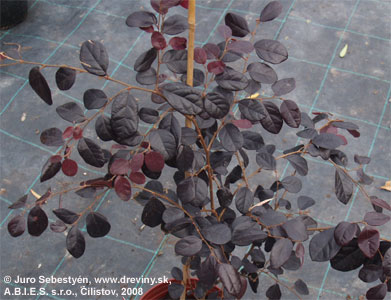 Description: Loropetalum is a versatile and interesting addition to every garden. It is a small, graciously growing shrub, with very soft purple shaped leaves. It’s an evergreen or semi-evergreen plant (depending on how far north it lives) adding colour to the garden all year long. The most common forms cover themselves in bright green foliage in early Spring, and surprise with hot-pink flowers shortly after. As the blooms fade, the foliage darkens to bronze, burgundy or purple shades remaining on the plant for the rest of the year. Because of the interesting colours of the Loropetalum varieties, it is usually used as a specimen plant in the landscape – as a spot of colour, a centrepiece, or a backdrop for a brighter foliage. Everybody who likes to have in the garden different shapes of leaves, loropetalum will belong to his loveliest ones. The plant grows fairly quickly, and is drought-tolerant once established (though young plants and new transplants require quite a bit of water at first, to get started). It likes acid soil (pH 5,1-5,5) and does well in sun or half-shade. Loropetalum will eventually reach a height of anywhere from 1,2 to 1,5m and a width about 1m. It is frost hardy to -15 °C. The natural habit of the shrub is loose, without being sparse or leggy, and it is soft and beautiful on its own. It doesn't mind to be pruned, however, and takes very well to being clipped into a more rounded shape, or pruned as a hedge. |
Loropetalum chinensis Black Pearl | details |
| 10. | Likiang Spruce, Lijiang Spruce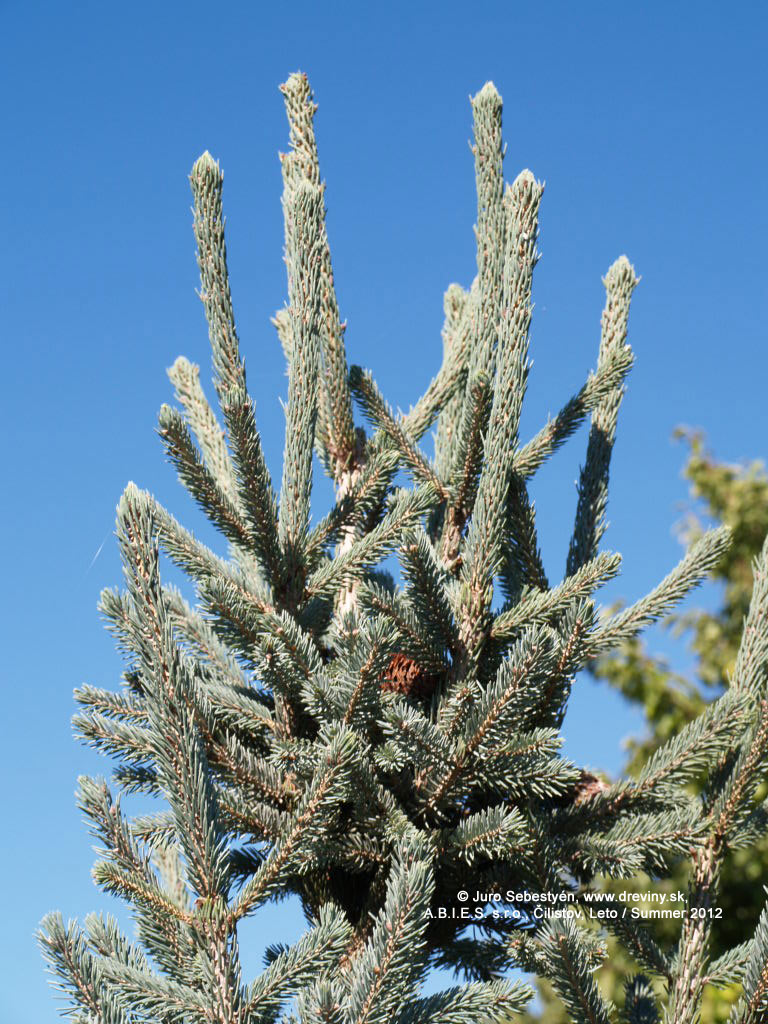 Description: |
Picea likiangensis Balfouriana (Purpurescens rubrescens) | details |
| 11. | Leopard Plant The Rocket Description: |
Ligularia stenocephala The Rocket | details |
| 12. | Littleleaf Linden Green Globe on high standad Description: This lovely dwarf cultivar is a slow growing, deciduous tree native to Europe, that will only reach a maximum height of 4 m. It is compact and round-headed, grafted onto a standard 200-220 cm high. Its bark is grayish brown and deeply furrowed. 4 to 8 cm long glossy, dark green, heart-shaped leaves change to yellow in autumn. Small, fragrant, pale yellow flowers are born in July growing in clusters. They attract bees in large numbers. It is an impressive small specimen tree suitable for narrow streets, courtyards and other paved areas where space is limited. Planted in rows it creates an imposing allée or windbreak. Performs best in moist but well drained fertile soils in a position receiving full sun to part-shade. Once established, this species tolerates drought and air pollution. It’s pH preference is neutral to alkaline. Grows well in temperature zones 3 to 7. Hardy. |
Tilia cordata Green Globe | details |
| 13. | Lavender Twist Weeping Redbud Description: The Lavender Twist Weeping Redbud, also known as Twisted Lavender Redbud, is a new variety of Redbud that is sure to attract the eye. This remarkable, decidious tree was originally found in 1991 in Westfield, New York, growing in the garden of Connie Covey. The umbrella shaped tree accentuates the weeping, twisted branches tipping towards the ground. As it matures, it gains a unique appearance. The reddish-purple buds open to rosy lavender-pink flowers in early spring that bloom for 2 to 3 weeks, and smoother the bear stems. Leaves are heart shaped, reddish-purple when emerging in the spring, changing to a dark lustrous green in the summer and then to a yellow fall color. After the leaves have fallen in the winter, the twisted trunk looks very ornamental. It forms brown, pea pod shaped fruits. The seed pods develop in October and usually stay on throughout the winter. Lavender Twist Weeping Redbud is a great specimen plant and perfect for a small protected area in the landscape. Best located in full sun or part shade in well drained soil, likes water but will not do well in wet conditions. Slow grower, matures up to 1,5 – 3m. Extremely hardy up to -30°C. |
Cercis canadensis Lavender Twist | details |
| 14. | Luzzii English Ivy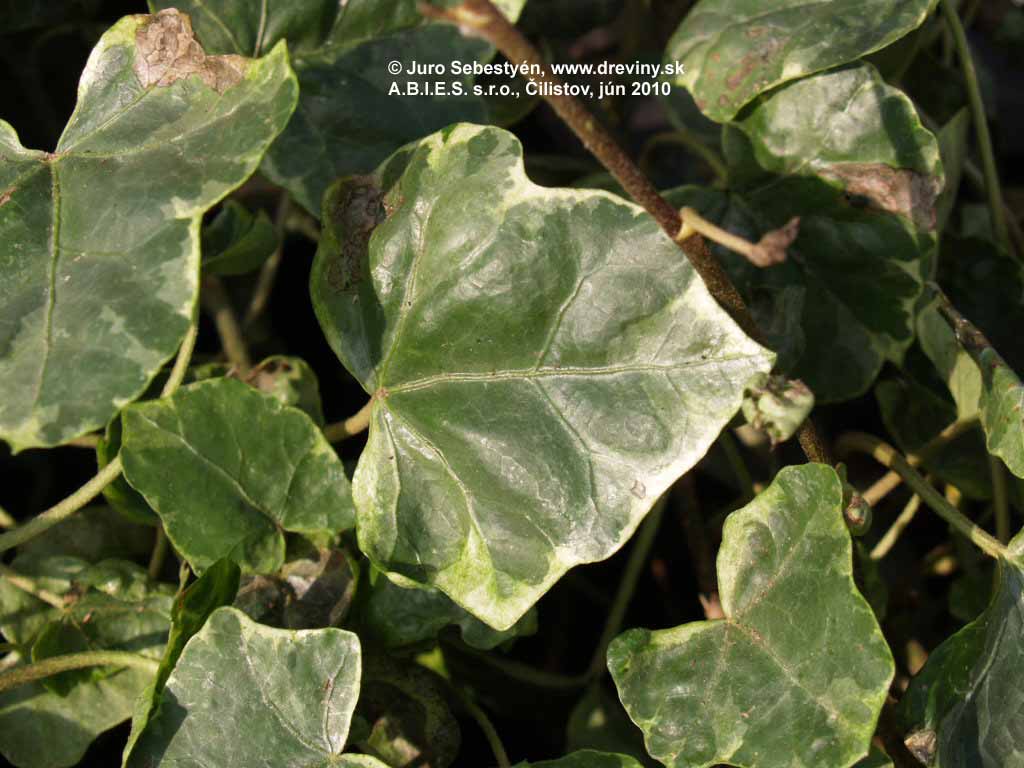 Description: |
Hedera helix Luzzii | details |
| 15. | Lapins Sweet Cherry Description: Lapins Dark Sweet Cherry is a firm, excellent quality, crack resistant fruit. They have mahogany-red colour with rich sweet flavor and ripen in late July. Trees are heavy producers, felf-fertile and resists late frosts. Lapins display showy pink and white flowers in springtime on trees that reach up to 40 feet in height. These sweet cherries are mostly grown around the Great Lakes, and in the valleys of Washington, Oregon and British Columbia. They require full sun and a long cool winter for the fruit to properly ripen. Lapin cherries do not tolerate extreme cold or warm winters. As with all fruit-bearing trees, Lapins need moist and well-drained soil, regular watering, and careful pruning of the trees to allow them to reach their full potential. |
Prunus avium Lapins | details |
| 16. | Lake Wallnut Description: |
Juglans regia Lake | details |
| 17. | Leyland cypressDescription: Leyland cypress is a fast growing evergreen tree with darker green foliage. It grows at a speed of 1m a year and therefore makes an excellent hedge plant. The tree has a dense, wide-spreading shape, sometimes with more leading sprouts when left untrimmed. Thanks to his profused branching and sprouting in the lower parts of the trunk, it can be easily formed into striking shapes – spiral, pyramid, cone, ball on standard or without standard. It can also be planted as a specimen in gardens and parks or in pots e.g. on terraces. It is a very vigorous plant very suitable for creating of wind barriers or separating walls blocking out the neighbouring tall buildings. If left untrimmed, Leyland cypress usually grows up to 12-14m tall and spreads 4-5m wide in 15-20 years. It thrives in sun or part shade in any well-drained acidic or alcaline soil. Tolerates most soil types. If you wish to establish a 2m high hedge then you should plant these plants at distance of 0.7-0.8m from each other. When planting a 1.5m high hedge you can plant 3 plants per one metre. In case of an only 1m high hedge there should be 4 plants plnated per metre. Standalone plants that will never be trimmed – i.e. in wind barriers - should be planted at a mutual distance of 4-5 metres. The Leyland cypress grows well in temperature zones 6-10 and therefore can be grown successfully all over the Middle Europe with exception of coldest moutain areas. THESE PLANTS ARE WELL ROOTED IN CONTAINERS THEREFORE YOU CAN PLANT THEM THROUGHOUT THE WHOLE YEAR. |
Cupressocyparis leylandii | details |
| 18. | Little Diamond Common Ivy, Little Diamond English Ivy Description: |
Hedera helix Little Diamond | details |
| 19. | Larix japonica Stiff Weeper on standard Description: |
Larix japonica Stiff Weeper | details |
| 20. | Lubawa Red Currant Description: |
Ribes rubrum Lubawa | details |
| 21. | London plane, London Planetree, Hybrid Plane Description: |
Platanus acerifolia Table Top | details |
| 22. | Littleleaf Linden Green GlobeDescription: This lovely dwarf cultivar is a slow growing, deciduous tree native to Europe, that will only reach a maximum height of 4 m. It is compact and round-headed, grafted onto a standard (220 cm). Its bark is grayish brown and deeply furrowed. 4 to 8 cm long glossy, dark green, heart-shaped leaves change to yellow in autumn. Small, fragrant, pale yellow flowers are born in July growing in clusters. They attract bees in large numbers. It is an impressive small specimen tree suitable for narrow streets, courtyards and other paved areas where space is limited. Planted in rows it creates an imposing allée or windbreak. Performs best in moist but well drained fertile soils in a position receiving full sun to part-shade. Once established, this species tolerates drought and air pollution. It’s pH preference is neutral to alkaline. Grows well in temperature zones 3 to 7. Hardy. |
Tilia cordata Green Globe | details |
| 23. | London plane, London Planetree, Hybrid PlaneDescription: |
Platanus acerifolia (hispanica) | details |
| 24. | Large Cranberry, American Cranberry, Bearberry Description: |
Vaccinium macrocarpon Early Black | details |
| 25. | Leyland CypressDescription: Leyland cypress is a fast growing evergreen tree with darker green foliage. It grows at a speed of 1m a year and therefore makes an excellent hedge plant. The tree has a dense, wide-spreading shape, sometimes with more leading sprouts when left untrimmed. Thanks to his profused branching and sprouting in the lower parts of the trunk, it can be easily formed into striking shapes – spiral, pyramid, cone, ball on standard or without standard. It can also be planted as a specimen in gardens and parks or in pots e.g. on terraces. It is a very vigorous plant very suitable for creating of wind barriers or separating walls blocking out the neighbouring tall buildings. If left untrimmed, Leyland cypress usually grows up to 12-14m tall and spreads 4-5m wide in 15-20 years. It thrives in sun or part shade in any well-drained acidic or alcaline soil. Tolerates most soil types. If you wish to establish a 2m high hedge then you should plant these plants at distance of 0.7-0.8m from each other. When planting a 1.5m high hedge you can plant 3 plants per one metre. In case of an only 1m high hedge there should be 4 plants plnated per metre. Standalone plants that will never be trimmed – i.e. in wind barriers - should be planted at a mutual distance of 4-5 metres. The Leyland cypress grows well in temperature zones 6-10 and therefore can be grown successfully all over the Middle Europe with exception of coldest moutain areas. THESE PLANTS ARE WELL ROOTED IN CONTAINERS THEREFORE YOU CAN PLANT THEM THROUGHOUT THE WHOLE YEAR. |
Cupressocyparis leylandii Pyramidalis (leylandii 2001) | details |
| 26. | Limette Description: |
Citrus latifolia Tahiti (Lime) | details |
| 27. | Large-leaved Linden, Large-leaved Lime Description: some of our photos shown here depict a shaped Large-leaved Linden as a protection against burning summer sun. Maintainance of his espalier is very simply - only one pruning at the beginning of spring |
Tilia platyphyllos (grandifolia) | details |
| 28. | Large-leaved Linden, Large-leaved LimeDescription: some of our photos shown here depict a shaped Large-leaved Linden as a protection against burning summer sun. Maintainance of his espalier is very simply - only one pruning at the beginning of spring |
Tilia platyphyllos (grandifolia) | details |
| 29. | Littleleaf Linden Green GlobeDescription: This lovely dwarf cultivar is a slow growing, deciduous tree native to Europe, that will only reach a maximum height of 4 m. It is compact and round-headed, grafted onto a standard (220 cm). Its bark is grayish brown and deeply furrowed. 4 to 8 cm long glossy, dark green, heart-shaped leaves change to yellow in autumn. Small, fragrant, pale yellow flowers are born in July growing in clusters. They attract bees in large numbers. It is an impressive small specimen tree suitable for narrow streets, courtyards and other paved areas where space is limited. Planted in rows it creates an imposing allée or windbreak. Performs best in moist but well drained fertile soils in a position receiving full sun to part-shade. Once established, this species tolerates drought and air pollution. It’s pH preference is neutral to alkaline. Grows well in temperature zones 3 to 7. Hardy. |
Tilia cordata Green Globe | details |
| 30. | Large Cranberry, American Cranberry, BearberryDescription: |
Vaccinium macrocarpon Early Black | details |
| 31. | Large-leaved Linden, Large-leaved LimeDescription: some of our photos shown here depict a shaped Large-leaved Linden as a protection against burning summer sun. Maintainance of his espalier is very simply - only one pruning in early spring. |
Tilia platyphyllos (Tilia grandifolia) | details |
| 32. | Lilac Pink Description: |
Syringa vulgaris Rosea | details |
| 33. | Lapins Sweet CherryDescription: |
Prunus avium Lapins | details |
| 34. | Lavallée's Hawthorn Carrierei Description: Een enkele keer als forse struik, echter vaker als kleine boom gekweekt. De kroon groeit in eerste instantie opgaand maar wordt uiteindelijk onregelmatig, min of meer rond. Breedte tot 5 m. De kroon doet zwaar aan vanwege de dichtheid en vanwege het donkere blad. Dit blad is glanzend donkergroen en voelt leerachtig aan. Aan de voorjaarsscheuten zitten roodgroene bladeren. De takken zijn voorzien van talrijke grote doorns, circa 4 cm lang. Vanuit de roze knoppen verschijnen in het voorjaar de witte bloemen. Deze worden gevolgd door een grote hoeveelheid doforanje steenvruchten die tot in de winter aanblijven. Deze hebben een doorsnede van circa 2 cm. Heeft een diepgaand en verspreid wortelgestel. Goed bestand tegen droge grond en luchtverontreiniging. |
Crataegus lavalleei Carrierei | details |
Last update on:
07.11.2026 17:10:02
10% discount | Hedging plants | Climbing shrubs and plants | Trees, shrubs and bushes for half-shade | Plants for shade | Bonsai plants | Flowering plants | Plants for terraces and balconies | Evergreen plants | Miniature plants growing up to 1.5m | Conifers growing up to 1.5 - 3m | Conifers growing higher than 3m | Deciduous bushes | Deciduous plants growing up to 3m | Deciduous plants growing higher then 3m | Fruit trees and bushes | Perennials | Ground covering bushes and perennials | Trees and shrubs with ornamental fruit | With beautiful autumn leaf colour | Discounts | Having interesting winter colour or shape | Plants for acid soils | Plants for alkaline soils | Grasses | Bamboos | For rock gardens | Woody plants to lakes and streams | Water plants | Healing and aromatic plants | Citruses | Supplementary goods | Bulbs | Small trees up to 5m wide, for small gardens | Fertilizers | Christmas trees | Fruit trees | Herbs | Multi-stemmed trees |
Naši partneri:
Odborné preklady a tlmočenie, aj úradné, Bratislava
www.kochlik.sk - kvetináče
www.zavlahy-soos.sk - zavlažovacie systémy
soulbridge.sk
www.kochlik.sk - kvetináče
www.zavlahy-soos.sk - zavlažovacie systémy
soulbridge.sk
www.rastliny-semena.sk - ponuka semien a osív
www.agellus.sk - trávnaté koberce
www.eshop-kvetinace.sk
www.agellus.sk - trávnaté koberce
www.eshop-kvetinace.sk


Webstránky vytvoril www.Aweb.sk - tvorba web stránok
VITAJTE V NAŠOM ZÁHRADNÍCTVE!
PREDAJŇA ČILISTOV SHOP - otvár. hodiny / open. hours:
Po-Pia / Mon-Fri 8:00-17:00
So/Sat 8:00-16:00